Travel guide
Tilaurakot and Kapilvastu 2027: The Buddha’s Childhood Home, Devdaha, Ramagrama and an Honest Day-Trip Plan from Lumbini
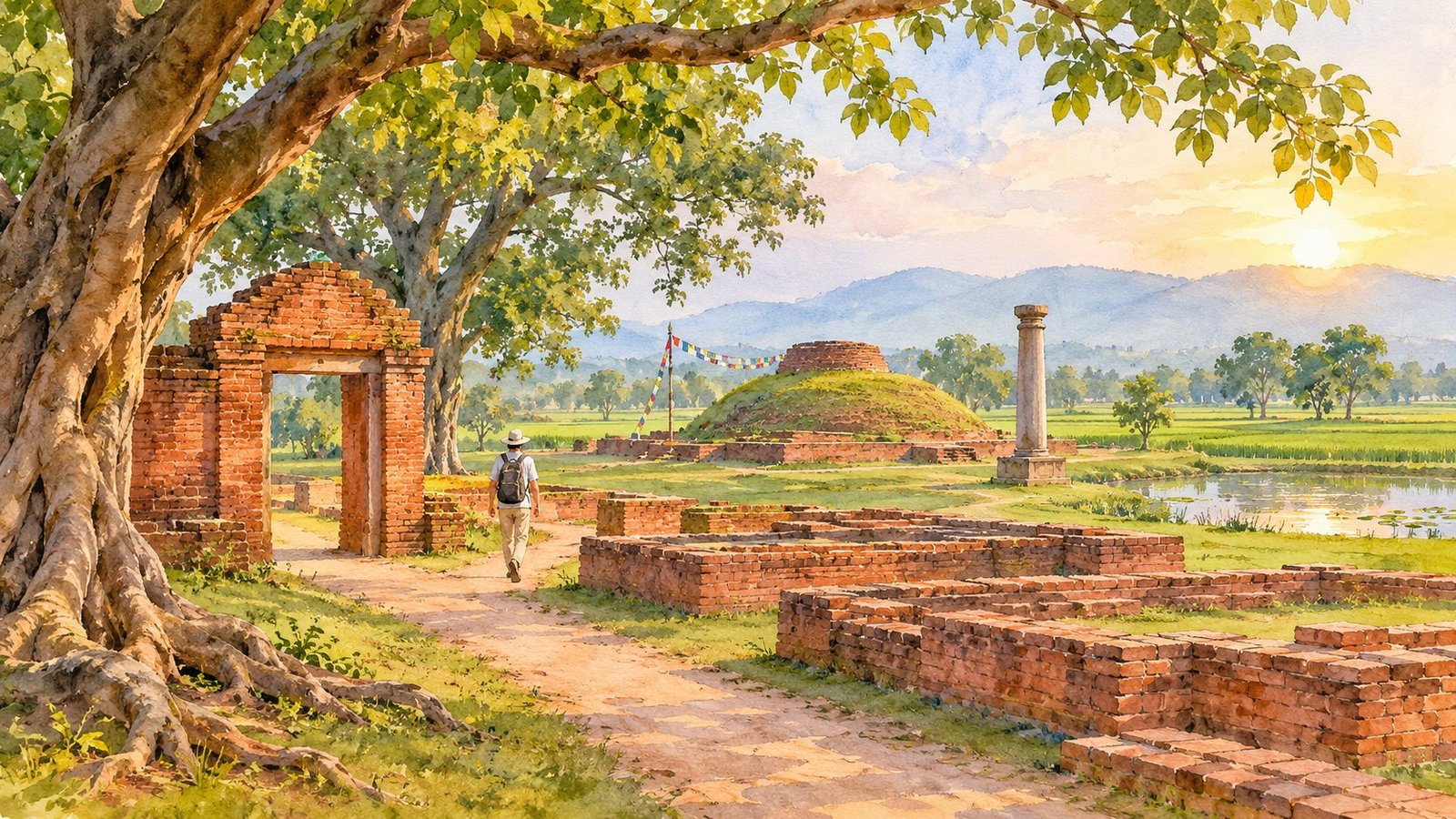
Lumbini is where the Buddha was born, but the rest of his early life happened within a few hours’ drive of it: he grew up at Tilaurakot in Kapilvastu, his mother’s family came from Devdaha, and one of the eight original stupas holding his relics still stands at Ramagrama.
Lumbini is the first chapter. The story goes on.
Most visitors see the Maya Devi Temple, ride around the monasteries and leave the next morning. They miss the brick walls of the town where Prince Siddhartha lived for 29 years, the place where he met his father again after his enlightenment, two Ashoka pillars standing in open fields, and a grassy relic stupa that no king or archaeologist has ever opened. These places are quiet, rural and almost empty of tourists. They are also not well signposted, and almost nobody explains them in plain English.
This guide covers why these sites matter, where ancient Kapilavastu really was, what you actually see at Tilaurakot and the Kapilvastu Museum, Kudan, Gotihawa, Niglihawa and Araurakot, Sagarhawa and the Jagdishpur lake, Devdaha, Ramagrama, how to get there and what it costs, fees and opening days, a timed one-day route, a two- and three-day plan, the best season, and how to do it all from a quiet base. For Lumbini itself, read our guides on where to stay for Lumbini and the Lumbini monasteries.
“We have seen Lumbini. Is Kapilvastu worth a whole day? And which of all those places with Ashoka pillars should we actually go to?”
A question travellers often ask our family
Quick answer: Yes, if the Buddha’s life means something to you. Give Kapilvastu one full day by car: Tilaurakot and its museum in the morning, then Kudan and Gotihawa, lunch in Taulihawa, and Niglihawa in the afternoon. Tilaurakot is about 27–29 km west of Lumbini. Devdaha and Ramagrama are on the other side, east of Lumbini, and fit into a half day. Go from October to March, start early, carry cash and water, and do not expect cafés or guides at the gate.
In This Guide
- Why go beyond Lumbini?
- The Buddha’s places at a glance
- Where was Kapilavastu: Nepal or India?
- Tilaurakot: what do you actually see?
- Is Tilaurakot a World Heritage Site?
- The Kapilvastu Museum
- Kudan: where the Buddha met his father again
- Gotihawa: an Ashoka pillar in a village
- Niglihawa and Araurakot
- Sagarhawa and the Jagdishpur lake
- Devdaha: the home of the Buddha’s mother
- Ramagrama: the relic stupa nobody opened
- How do you get there, and what does it cost?
- Entry fees and opening days
- A timed one-day Kapilvastu route
- Two or three days: putting it all together
- Best season, weather and what to bring
- Visiting from Greenkunja
1. Why go beyond Lumbini?
Lumbini marks one moment: the birth. The Buddha’s early life, his family and his first return home after enlightenment all happened in the countryside around it, on both sides of today’s Rupandehi district. Seeing those places turns a famous name into a real landscape of villages, rivers and brick ruins.
There is a second reason. Lumbini can be busy, especially around Buddha Jayanti. At Tilaurakot or Gotihawa on a winter morning you may be the only visitors, with farmers and buffalo for company. For many travellers that quiet is the most moving part of the trip.
| Part of the Buddha’s life | Place | Where it is today |
|---|---|---|
| His mother’s family home | Devdaha | East of Butwal, Rupandehi |
| His birth | Lumbini (Maya Devi Temple) | Rupandehi, about 30–35 km from Greenkunja |
| His first 29 years as a prince | Kapilavastu, identified in Nepal with Tilaurakot | Near Taulihawa, Kapilvastu district |
| Meeting his father again after enlightenment | Kudan (Nigrodharama) | Just south of Taulihawa |
| A share of his relics | Ramagrama stupa | Near Parasi, Nawalparasi (West) |
Two more sites, Gotihawa and Niglihawa, are linked by Buddhist tradition to two earlier Buddhas, Krakuchhanda and Kanakamuni. Emperor Ashoka visited them in 249 BCE and raised stone pillars, which you can still see.
Insider tip: Think of this region as one long story, not a list of ruins. Read a short life of the Buddha before you go, and each site will make far more sense.
2. The Buddha’s places at a glance
Distances below are approximate road figures. The Kapilvastu sites are given from Taulihawa, the district headquarters, using the Lumbini Development Trust descriptions.
| Site | What it is | Where | Time to allow | Worth it? |
|---|---|---|---|---|
| Tilaurakot | Walled town identified with ancient Kapilavastu | 3 km north-west of Taulihawa; about 27–29 km west of Lumbini | 1.5–2 hours | Yes, the highlight |
| Kapilvastu Museum | Finds from the excavations | At Tilaurakot | 30–45 minutes | Yes, if open |
| Kudan (Nigrodharama) | Brick stupas, a well and a pond | About 3 km south of Taulihawa | 30 minutes | Yes |
| Gotihawa | Ashoka pillar stump and stupa | About 5 km south-west of Taulihawa | 20–30 minutes | Yes, for pilgrims |
| Niglihawa | Broken inscribed Ashoka pillar | About 7 km north-east of Taulihawa | 30 minutes | Yes, for pilgrims |
| Araurakot | Old fortified mound | 1.4 km east of Niglihawa | 20 minutes | Only if passing |
| Sagarhawa | Lake and the site of the Shakya massacre | About 12 km north of Taulihawa | 30 minutes | For history lovers |
| Jagdishpur Reservoir | Lake with migratory birds | About 11 km north of Taulihawa | 30–60 minutes | Yes, in winter |
| Devdaha | Home of Maya Devi’s family; temples and old ponds | East of Butwal | Half a day | Yes, if you stay near Butwal |
| Ramagrama | Unopened relic stupa | About 3 km south of Parasi; about 40 km east of Lumbini | 45 minutes | Yes, very peaceful |
Distances are approximate and taken from the Lumbini Development Trust, The Kathmandu Post and ECS Nepal. Road times change with traffic and road works.
3. Where was Kapilavastu: Nepal or India?
This is the first question many visitors ask, and the honest answer is that two countries identify it differently.
- Nepal identifies ancient Kapilavastu with Tilaurakot, near Taulihawa. The Chinese pilgrims Faxian and Xuanzang, who travelled here in the 5th and 7th centuries, described a ruined city about 30 km west of Lumbini, which matches Tilaurakot.
- India identifies it with Piprahwa and Ganwaria, in Siddharthnagar district of Uttar Pradesh, just across the border, where a casket with relics was found in 1898.
You do not need to take a side to enjoy either place. The two areas are close together, and both are part of the same ancient Shakya country. As The Kathmandu Post reported in July 2025, this disagreement is one reason Tilaurakot’s World Heritage bid has been slow, and some experts have suggested a joint nomination by the two countries.
Insider tip: If you are crossing to India at Sunauli, Piprahwa makes an easy stop on the Indian side. Our Sunauli border crossing guide explains the crossing step by step.
4. Tilaurakot: what do you actually see?
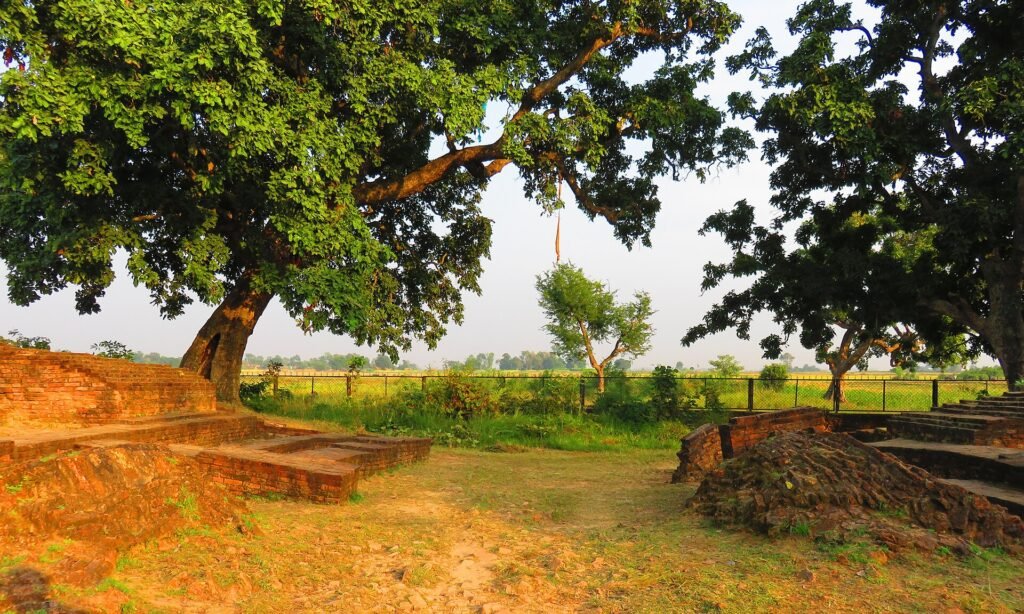
Tilaurakot sits in open farmland on the bank of the Banganga river, with the Churia hills on the northern horizon. It is a walled town, not a palace in the way many visitors imagine. There are no roofs or statues; what survives is low brickwork among huge old trees.
- The walls and gates. A brick wall surrounds the town. The excavated gateways, including the east gate, are the most impressive part and the best place to imagine the old city.
- Foundations. Inside the walls are the brick bases of buildings, wells and lanes. Excavations have also found a moat around the town.
- The Samai Mai shrine. A small, living shrine where local people leave clay elephants and horses as offerings. It is one of the most photographed corners of the site.
- Ponds and trees. Ancient ponds and very old trees give the site its calm, park-like feel.
What the archaeologists found
Tilaurakot was rediscovered in 1899. Since 2013, a team from Durham University, Nepal’s Department of Archaeology and the Lumbini Development Trust has excavated and surveyed the site. According to The Kathmandu Post, they found remains going back at least 2,800 years, signs that a planned town existed here by about the 6th century BCE, and, in 2015, a pot holding 494 punch-marked coins. In 2016 they uncovered houses, roads, walls and wells.
In February 2026 the team announced a new find inside the citadel: an apsidal temple, with a curved back wall, from roughly the 3rd to 5th centuries CE, built over the remains of an older palace complex. Tibetan Review reported that it is the first building of its kind found in Nepal, and that it shows Tilaurakot was an active place of Buddhist pilgrimage, not only a political capital.
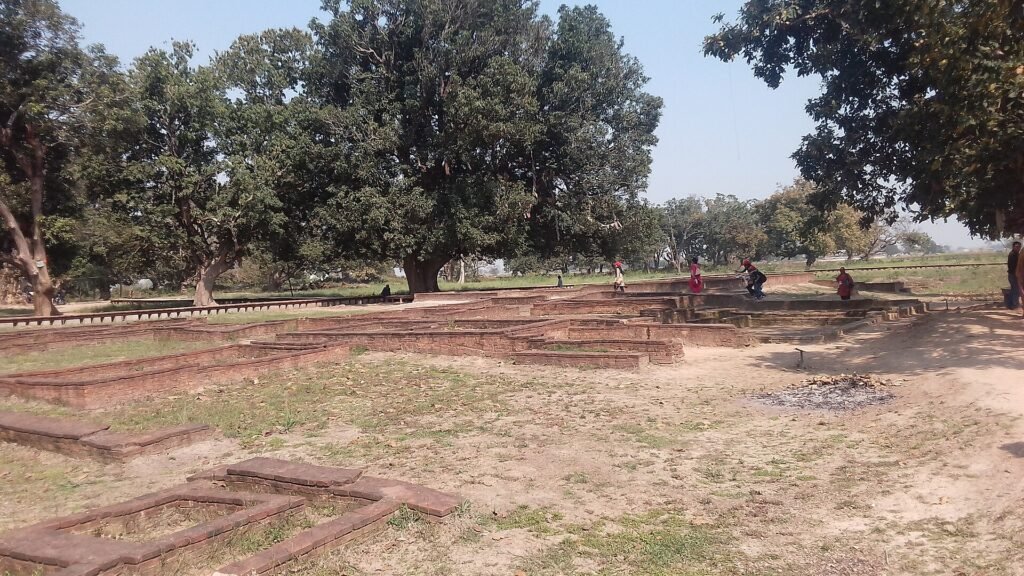
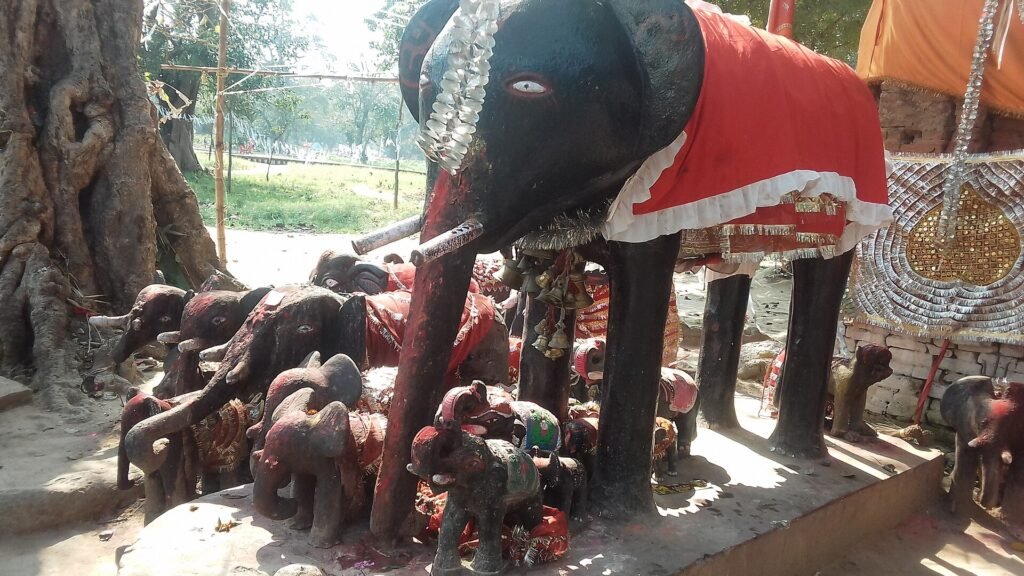
Insider tip: Walk the full line of the wall, not just the centre. The gates and the quiet western side, near the river, are where most people feel the place.
5. Is Tilaurakot a World Heritage Site?
Not yet. Here is the short history:
- 1996: Tilaurakot is added to UNESCO’s tentative list.
- January 2025: Nepal submits a full nomination for “Tilaurakot-Kapilavastu”.
- July 2025: at its 47th session in Paris, the World Heritage Committee defers the bid, after its advisers recommended more work. (The Kathmandu Post)
- February 2026: the new temple discovery is announced, and archaeologists hope it will strengthen the next attempt.
For visitors this changes little. The site is protected, the Lumbini Development Trust has cleared and tidied the area, and you can walk around freely. Lumbini itself also failed twice before it was listed in 1997, so most people expect Tilaurakot to get there in time.
6. The Kapilvastu Museum
The small museum near the Tilaurakot mound shows what the excavations found. It opened in 1962 in Taulihawa and moved to Tilaurakot in 1985. Its displays include terracotta figures of people and animals, coins, seals, beads and bangles, pottery, and toys.
- Fee: the Nepal Tourism Board lists NPR 10 for foreigners and NPR 5 for SAARC visitors
- Closed: on Tuesdays, according to the same page
- Time needed: 30–45 minutes
Prices can change at any time. Opening days and fees are set by the authorities and may change without notice. Check locally on the day.
Insider tip: Plan your Kapilvastu day for any day except Tuesday, so that the museum is open.
7. Kudan: where the Buddha met his father again
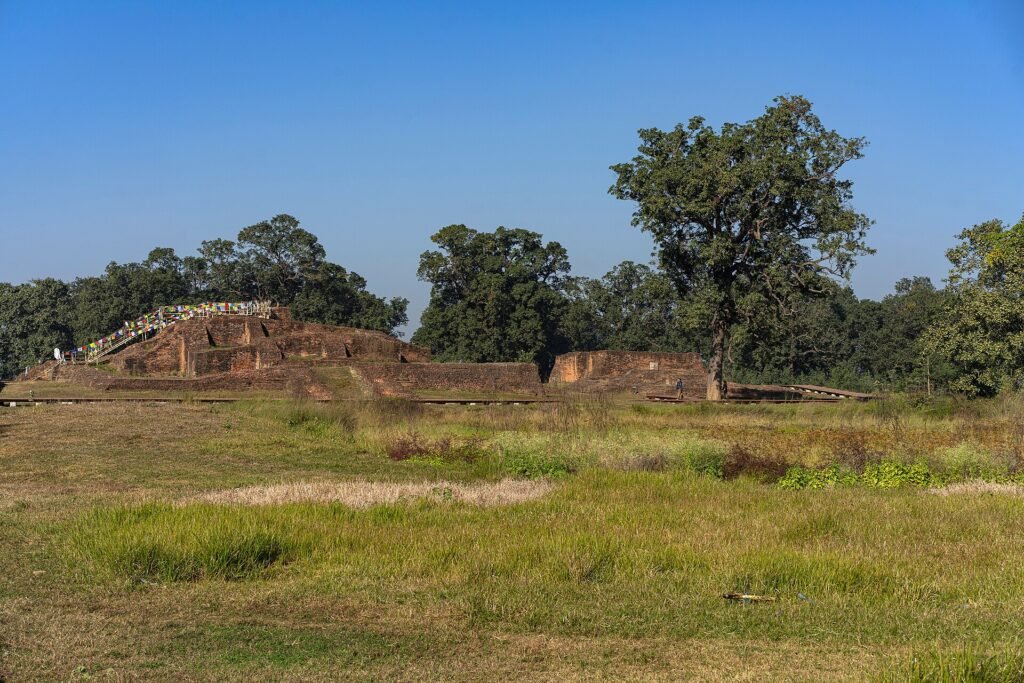
Kudan, about 3 km south of Taulihawa, is identified with the ancient Nigrodharama, a park with a monastery that King Suddhodana is said to have prepared for his son. According to tradition, it is here that the Buddha met his father, his wife Yashodhara and his son Rahula again, after his enlightenment, and here that Rahula joined the order.
Today you see the brick bases of three stupas, a well and a pond, on a quiet green site beside the road. A modern shrine stands nearby.
8. Gotihawa: an Ashoka pillar in a village
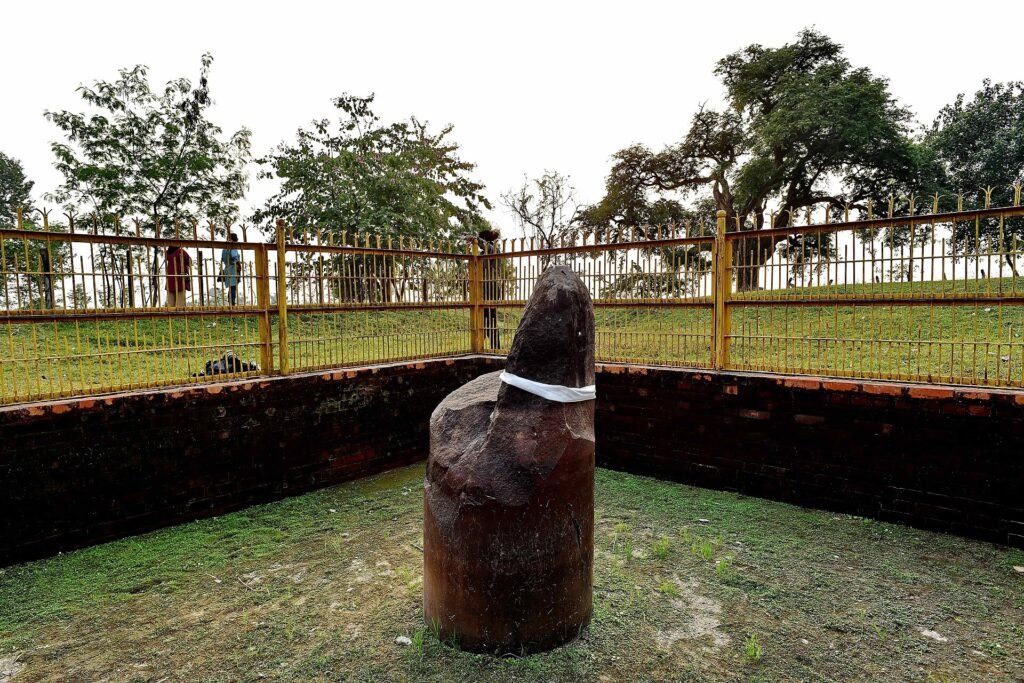
Gotihawa, about 5 km south-west of Taulihawa, is identified as the birthplace of Krakuchhanda Buddha, one of the Buddhas who came before Siddhartha Gautama in Buddhist tradition. Emperor Ashoka came here in 249 BCE and raised a pillar.
- The lower part of the Ashoka pillar still stands where it was raised, about 3.25 m high, inside a small enclosure
- Behind it are the remains of a brick stupa
- People have lived at this spot since at least the 6th century BCE, and finds from a 1990s excavation go back even earlier
Insider tip: Gotihawa is small. Pair it with Kudan, which is on the same side of Taulihawa, so you do not drive back and forth.
9. Niglihawa and Araurakot
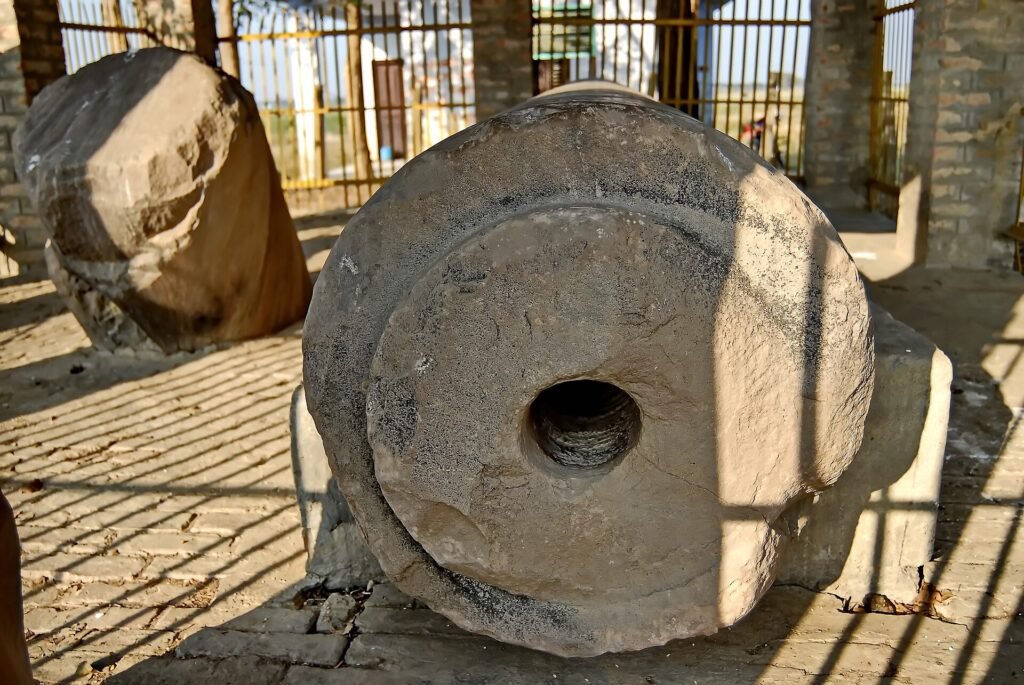
Niglihawa, about 7 km north-east of Taulihawa, is identified as the birthplace of Kanakamuni Buddha. Ashoka visited in 249 BCE and raised an inscribed pillar. It now lies in two pieces; the lower piece is about 3.2 m long. The pillar also carries a much later inscription by King Ripu Malla, dated 1312 CE. The German archaeologist Alois Führer found it in 1895, and a small statue of Kanakamuni Buddha has been put up at the site.
Araurakot is 1.4 km further east: a large, rectangular mound with traces of a moat and brick walls, identified as the hometown of Kanakamuni Buddha. A 2015 geophysical survey for UNESCO found the remains of buildings under the ground. There is little to see on the surface, so stop only if you are already at Niglihawa and curious.
10. Sagarhawa and the Jagdishpur lake
Sagarhawa, about 12 km north of Taulihawa, is a forest lake linked to a sad story: the massacre of the Shakyas by King Virudhaka of Kosala, late in the Buddha’s life. Hundreds of small stupas were later built here in memory of the dead, and Führer uncovered many of them in 1897. Today it is a quiet lake in the trees; come for the atmosphere rather than for ruins.
Jagdishpur Reservoir, about 11 km north of Taulihawa, is a large lake of about 157 hectares and a wetland protected under the Ramsar Convention. In winter it fills with migratory birds; The Kathmandu Post counted more than 22,000 birds, which stay until about February.
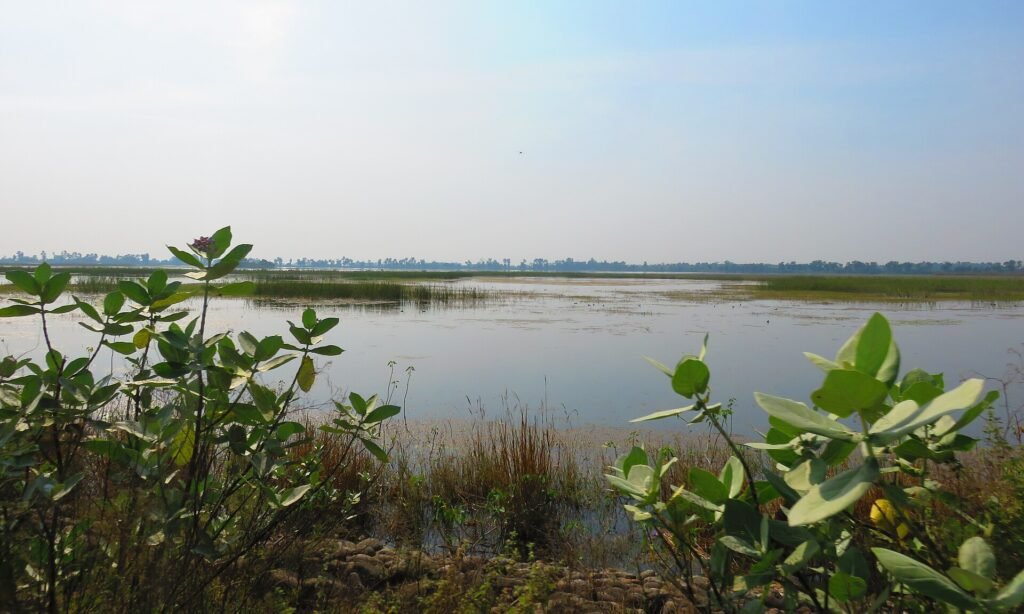
Insider tip: Bring binoculars from November to February. The last hour of light at Jagdishpur is a lovely way to end a day of ruins.
11. Devdaha: the home of the Buddha’s mother
Devdaha, east of Butwal, is identified as the capital of the ancient Koliya clan and the family home of Queen Maya Devi, the Buddha’s mother. Her sister Prajapati Gautami, who raised the young prince after Maya Devi died, and Yashodhara, his wife, are also said to have come from here. Tradition says Maya Devi was travelling to Devdaha to give birth in her parents’ home when the Buddha was born on the way, in Lumbini.
The sites are spread out along both sides of the East–West Highway, within a few kilometres of it:
- Devdaha pond: about 1 km north of Shitalnagar, at the foot of the hills, believed to be what remains of the ancient pond that gave Devdaha its name (“pond of the gods”)
- Kanyamai: about 300 m from the main road at Shitalnagar, a temple linked to Prajapati Gautami, with excavated walls, wells and stone sculptures
- Bairimai: a few hundred metres from Kanyamai, beside the Kairani river, with a modern temple over old ruins
- Bhawanipur: south of the highway, with a temple to Maya Devi, a broken stone pillar some link to Ashoka, and an ancient brick well
- The Pakari tree: a huge, much-loved fig tree hung with prayer flags
Excavations here are still going on. In 2023 the Lumbini Development Trust began digging at Khayardanda to test whether it was the site of the old Koliya town. No firm results had been published when we checked.
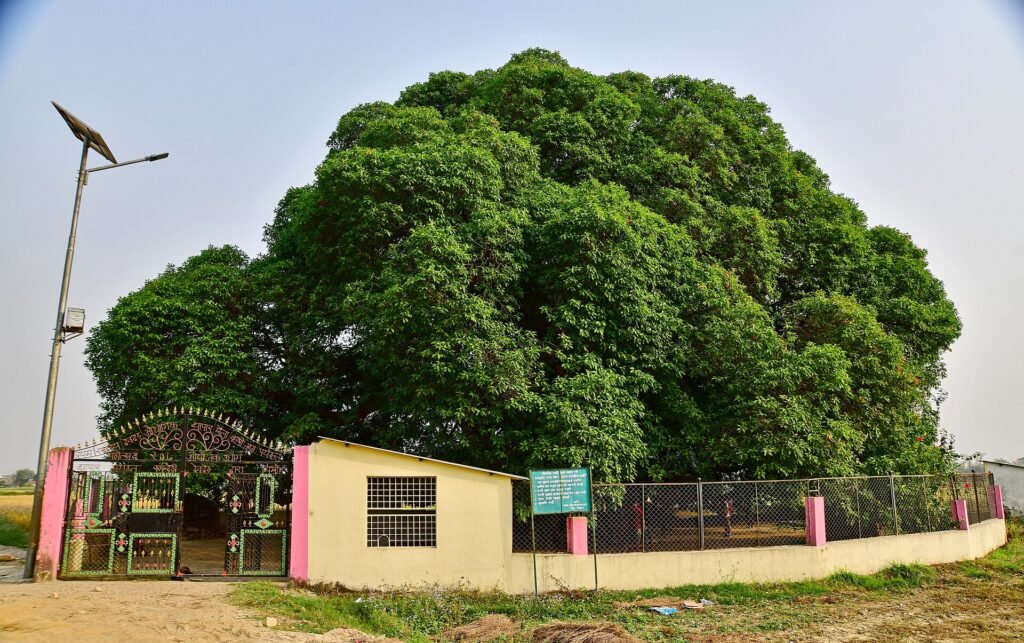
Honest note: Devdaha is a living town, not a heritage park. The sites are small, signs are few, and some ruins are covered by trees. It is moving if you know the story, and easy to miss if you do not.
Insider tip: Devdaha is much closer to Greenkunja and Butwal than to Lumbini. If you only have a morning, it is the easiest of all these places to add.
12. Ramagrama: the relic stupa nobody opened
After the Buddha died, his ashes and relics were divided between eight groups, and each built a stupa over its share. The Koliya people built theirs at Ramagrama. Buddhist texts say Ashoka later opened the other stupas to spread the relics across his empire, but left this one alone, because it was guarded by nagas, serpent spirits, and elephants were seen bringing it flowers and water.
According to UNESCO’s tentative list, it is the only one of the eight original relic stupas that has never been disturbed. Today it is a grassy brick mound about 7 m high, in a quiet garden about 3 km south of Parasi.
- It was identified by W. Hoey in 1899; Nepal’s Department of Archaeology excavated around it in 1977 and found four building phases, from the Mauryan to the Gupta periods
- A 2018 survey by Durham University and the Lumbini Development Trust found an ancient pond about 40 m by 25 m and a monastery about 60 m by 30 m just beside it (The Himalayan Times)
- A Japanese garden with a small shrine and a baby Buddha statue stands on the west side
- It is getting better known: Ekantipur reported 15,038 foreign visitors in ten months of 2025
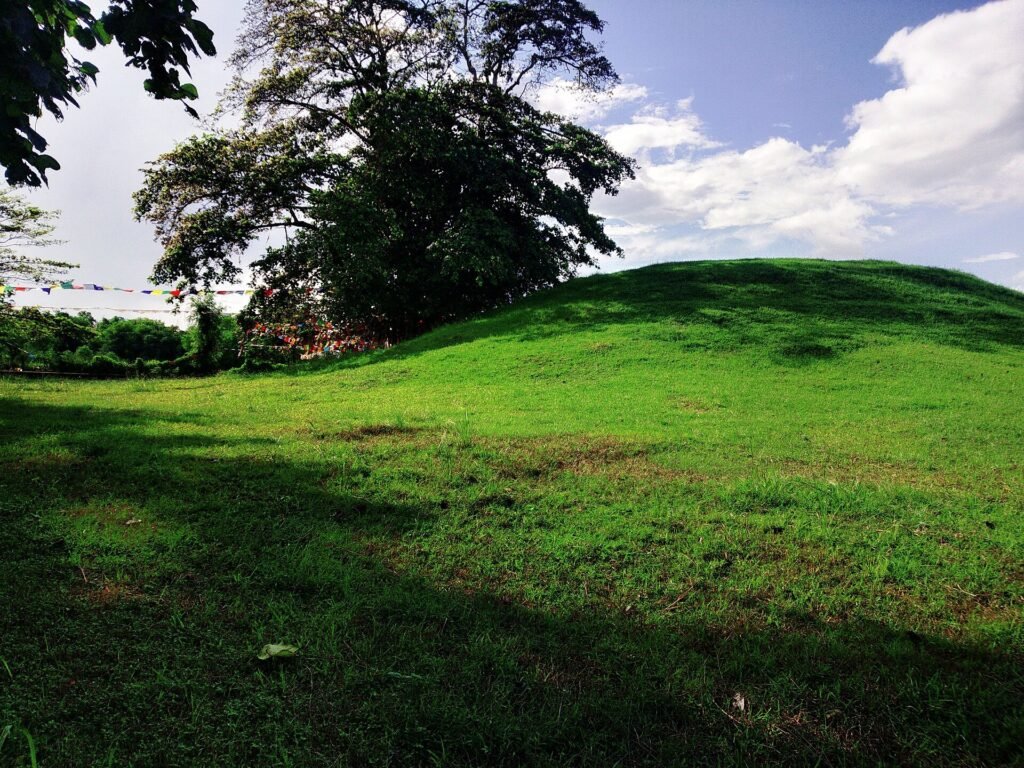
Getting there: from Parasi, go 3 km south to Ujjaini Chowk, turn east through the large gate, and follow a narrow road for about 600 m (ECS Nepal). The stupa is hidden by trees, so you cannot see it from the gate.
Insider tip: Walk slowly around the stupa clockwise, as pilgrims do. Do not climb it; visitors are asked not to.
13. How do you get there, and what does it cost?
Public transport reaches Taulihawa and Parasi, but the sites themselves are scattered among villages. For most visitors a car with a driver for the day is by far the easiest choice.
| Option | How it works | Good for | Watch out for |
|---|---|---|---|
| Car with driver for the day | Picks you up, waits at each site, brings you back | Most visitors; seeing 4–6 sites in a day | Agree the price, the sites and the waiting time first |
| Taxi from Lumbini | Round trip to Tilaurakot and nearby sites | Short visits to 1–3 sites | Agree what is included before you start |
| Local bus | Lumbini or Bhairahawa to Taulihawa, then a rickshaw or e-rickshaw | Tight budgets and lots of time | Slow, crowded and hot; hard to reach more than one site |
| Motorbike | Rented in Butwal or Bhairahawa | Confident riders with a valid licence | Heavy trucks on the highway, dust and heat |
Prices can change at any time. Car and taxi prices are not fixed by any official body and change with fuel prices, the season and the number of sites. Always agree the full price before you set off.
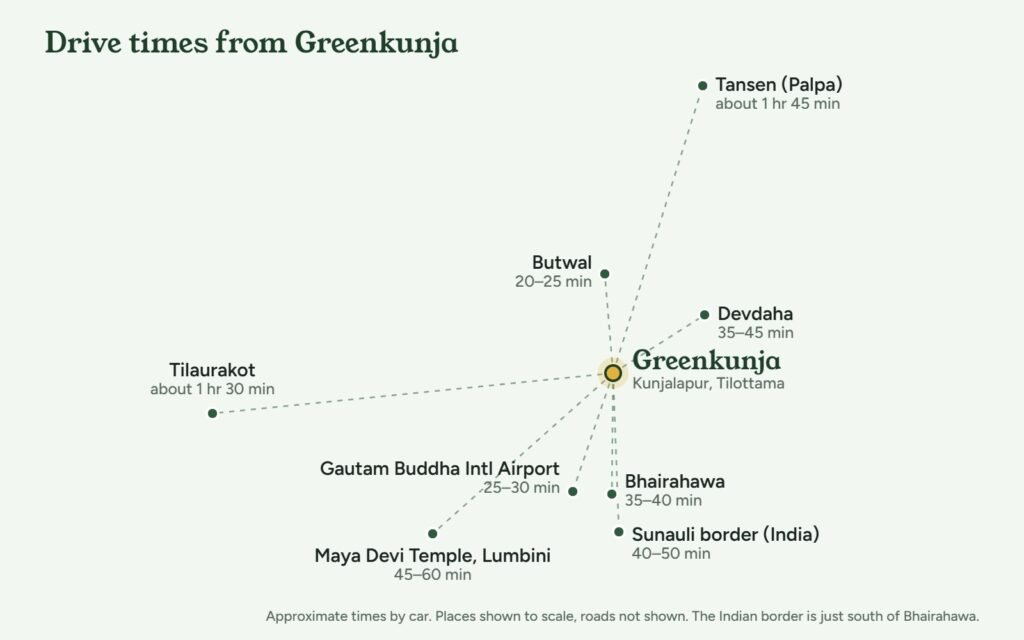
Approximate drive times from Greenkunja
| From Greenkunja, Tilottama to | Distance (approx.) | Time by car (approx.) |
|---|---|---|
| Devdaha (Shitalnagar area) | 15–25 km depending on the site | 30–45 minutes |
| Lumbini (Maya Devi Temple) | 30–35 km | 45–60 minutes |
| Ramagrama, near Parasi | About 45 km | About 1 hour 15 minutes |
| Tilaurakot, Kapilvastu | About 60 km | About 1 hour 30 minutes |
Approximate figures; road works and traffic in Bhairahawa and Butwal can add time.
Insider tip: Fly into Bhairahawa? Our Kathmandu to Lumbini guide covers flights, buses and the airport, which is only 15 km from Greenkunja.
14. Entry fees and opening days
Fees here are low or zero, but the information is scattered. This is what we could confirm in November 2026:
| Place | Fee for foreign visitors | Notes |
|---|---|---|
| Lumbini (Sacred Garden) | See our Lumbini fees table | Separate fees for SAARC and Indian visitors |
| Kapilvastu Museum | NPR 10 (Nepal Tourism Board) | Closed on Tuesdays |
| Tilaurakot site | No official fee published online | Some tour operators mention a combined local ticket; ask at the gate |
| Kudan, Gotihawa, Niglihawa, Araurakot, Sagarhawa | We found no official fee | Open sites; donations welcome at shrines |
| Devdaha sites | No fee | Temples are active places of worship |
| Ramagrama stupa | We found no official fee | Garden site maintained by the Lumbini Development Trust |
Prices can change at any time. Fees and rules can change without notice. For official information, contact the Lumbini Development Trust on +977-71-404040 or check at each site.
- Hours: the outdoor sites are best visited in daylight, roughly from sunrise to sunset; the museum keeps office hours
- Cash: bring Nepali rupees in small notes; there are no card machines at the sites
- Guides: there are usually no official guides waiting at these sites, so read up before you go (this guide is a good start)
15. A timed one-day Kapilvastu route
This route starts from Greenkunja or Butwal and covers the best of Kapilvastu in one relaxed day. From Lumbini, leave about 45 minutes later.
| Time | Stop | Notes |
|---|---|---|
| 6:45 | Leave Greenkunja after an early breakfast | We can prepare breakfast early for you |
| 8:15–10:00 | Tilaurakot: walls, gates, Samai Mai shrine | Best light and coolest air |
| 10:00–10:45 | Kapilvastu Museum | Not on Tuesdays |
| 11:15–11:45 | Kudan | South of Taulihawa |
| 12:00–12:30 | Gotihawa | Same side of town as Kudan |
| 12:45–14:00 | Lunch and rest in Taulihawa | Simple Nepali and Indian food |
| 14:15–15:00 | Niglihawa (and Araurakot if you like) | North-east of Taulihawa |
| 15:30–16:30 | Jagdishpur Reservoir or Sagarhawa | Birds in winter; quiet forest lake |
| 16:45–18:15 | Drive back | Back for dinner |
Insider tip: Book the same driver for the whole day. He will know the village roads, wait while you explore, and there is no new price discussion at every stop.
Half-day east route (Devdaha and Ramagrama): leave at 7:00, spend about two hours at the Devdaha sites, drive to Ramagrama (about 1 hour), walk around the stupa, and be back for a late lunch. Or reverse it and end at Ramagrama in the evening light.
16. Two or three days: putting it all together
| Day | Plan | Why this order |
|---|---|---|
| Day 1 | Lumbini: Maya Devi Temple at opening, the monastic zone, World Peace Pagoda at sunset (monastery routes) | The birth comes first in the story |
| Day 2 | Kapilvastu: Tilaurakot, museum, Kudan, Gotihawa, Niglihawa | The childhood and the return home |
| Day 3 (morning) | Devdaha and Ramagrama | The mother’s family and the relics |
| Day 3 (afternoon) | Rest, or drive on to Tansen or Pokhara (Tansen day-trip guide) | The hills are 1–2 hours north of Butwal |
With only two days, do Lumbini on day 1 and Kapilvastu on day 2, and add Devdaha on your way in or out, since it lies on the highway east of Butwal.
Insider tip: Staying between Butwal and Bhairahawa puts you in the middle of all of this: Devdaha to the east, Lumbini to the south-west, Kapilvastu to the west.
17. Best season, weather and what to bring
| Season | Weather | What it means for you |
|---|---|---|
| October–November | Dry, clear, warm days | The best time; rice harvest in the fields |
| December–February | Cool, sometimes foggy mornings | Good; start a little later on foggy days; best for birds at Jagdishpur |
| March–April | Warm, then hot | Fine for early starts; Buddha Jayanti often falls in April or May |
| May–June | Very hot | Visit only at dawn and dusk |
| July–September | Monsoon rain | Green and beautiful, but muddy paths and some flooded roads |
Buddha Jayanti, the Buddha’s birthday, is listed on 20 May 2027 by the Dhamma Janani meditation centre in Lumbini. Lumbini is very busy that day; the Kapilvastu sites stay quiet.
- Water, a hat and sunscreen; there is very little shade between sites
- Light clothes that cover shoulders and knees, as at any Buddhist or Hindu site
- Cash in small notes for donations, tea and lunch
- Mosquito repellent from April to October
- Binoculars in winter, for Jagdishpur
- A charged phone with offline maps; signs are few and village roads are confusing
Insider tip: Do not climb on walls, stupas or pillars, and ask before photographing people at shrines. Drones need permission at heritage sites.
18. Visiting from Greenkunja
Greenkunja is our family’s small guesthouse in Kunjalapur, a farming village in Tilottama, between Butwal and Bhairahawa. It sits right between the eastern sites (Devdaha, Ramagrama) and the western ones (Lumbini, Kapilvastu), so you can see all of them without changing hotels. See the room and the photos.
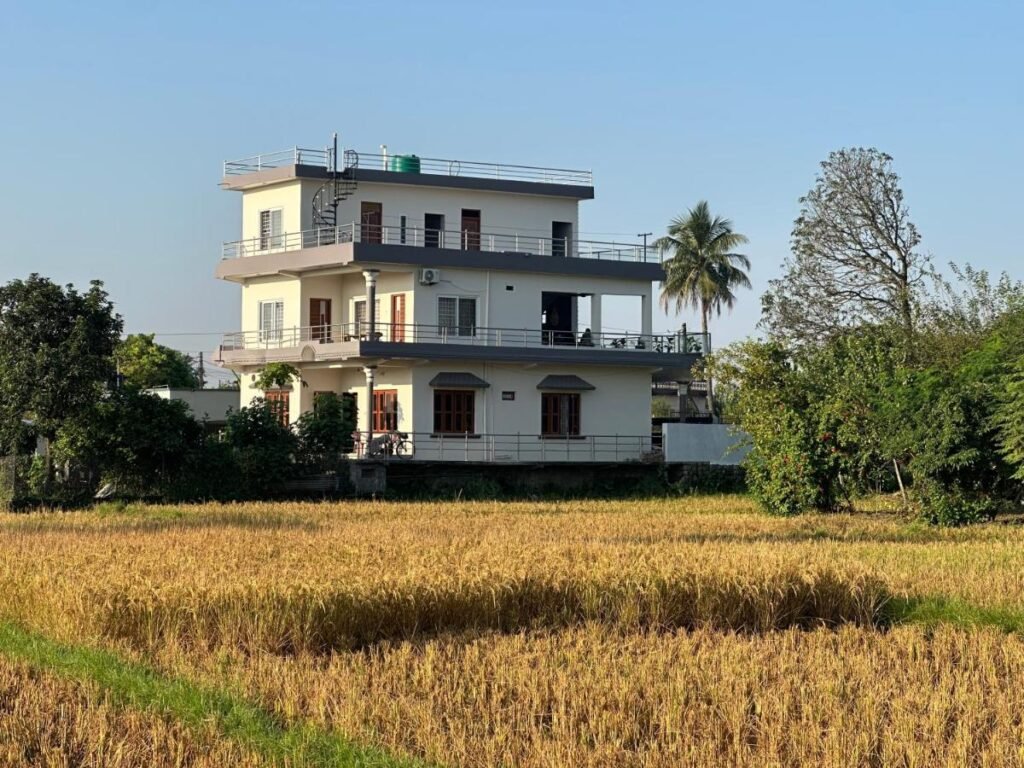
- A double room with a terrace over the rice fields, a private bathroom, air conditioning, free WiFi and parking
- Breakfast included, and early breakfast on request for long day trips
- About 15 km from Gautam Buddha International Airport and 30–35 km (45–60 minutes) from the Maya Devi Temple
- We can help you arrange a car with driver for Kapilvastu, Devdaha and Ramagrama
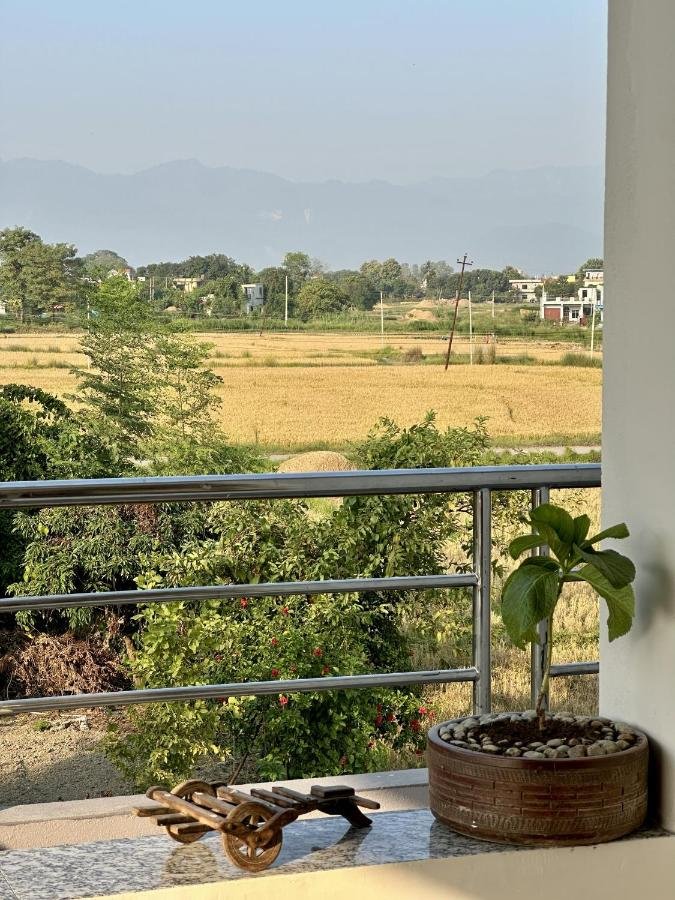
You may be happier elsewhere if you want to walk to the Maya Devi Temple at sunrise without a car (stay in Lumbini village), or if you want shops and restaurants at your door (stay in Butwal). Our where to stay for Lumbini guide compares the areas honestly.
Get a Fixed Price
Send us your dates and the places you want to see. We will reply with a clear price for your room and, if you want, help you arrange a car with driver for Kapilvastu, Devdaha or Ramagrama, so you know the full cost before you travel.
Planning your days beyond Lumbini? WhatsApp +91 98109 09368 or email info@greenkunja.com.
Plan Your Days Beyond Lumbini in Just 3 Steps
- Choose your days: one day for Kapilvastu, a half day for Devdaha and Ramagrama, and at least one day for Lumbini itself.
- Choose your base: somewhere between Butwal and Bhairahawa keeps every site within about 1.5 hours.
- Book your car and room: message us your dates; we confirm the room and help with the car.
Your Beyond-Lumbini Checklist
- Have you avoided Tuesday for your Kapilvastu day, so the museum is open?
- Have you agreed the car price, the sites and the waiting time?
- Do you have cash in small notes?
- Do you have water, a hat and clothes that cover shoulders and knees?
- Have you read the story of the Buddha’s early life?
- If it is winter, have you allowed for morning fog?
- Have you downloaded offline maps?
Summary: A Simple Way to Think About It
Lumbini is the birth. Tilaurakot and Kudan are the childhood and the return home. Gotihawa and Niglihawa are the deep past of Buddhist tradition, marked by Ashoka. Devdaha is the mother’s family, and Ramagrama holds the relics. One day for Kapilvastu, half a day for Devdaha and Ramagrama, start early, go slowly, and you will understand the Buddha’s world far better than most visitors ever do.
Frequently Asked Questions
What is Tilaurakot?
Tilaurakot is a walled ancient town near Taulihawa in Kapilvastu district, Nepal. Nepal identifies it with Kapilavastu, the capital of the Shakya clan, where Prince Siddhartha lived until he was 29.
How far is Tilaurakot from Lumbini?
About 27–29 km west of Lumbini by road, usually around 45 minutes to an hour by car. From Greenkunja in Tilottama it is about 60 km, or roughly 1 hour 30 minutes.
Is Kapilvastu in Nepal or India?
Both countries identify it differently. Nepal places it at Tilaurakot, near Taulihawa; India places it at Piprahwa and Ganwaria in Uttar Pradesh, just across the border.
Is Tilaurakot a UNESCO World Heritage Site?
Not yet. It has been on UNESCO’s tentative list since 1996. Nepal submitted a nomination in January 2025, and the World Heritage Committee deferred it in July 2025.
Is there an entry fee for Tilaurakot?
We could not find an official fee published online. The Nepal Tourism Board lists NPR 10 for foreigners at the Kapilvastu Museum, which is closed on Tuesdays. Ask at the site, as fees can change.
How many days do I need for Kapilvastu?
One full day by car covers Tilaurakot, the museum, Kudan, Gotihawa and Niglihawa. Add half a day for Devdaha and Ramagrama.
Can I visit Kapilvastu by public bus?
Yes, local buses run to Taulihawa, but the sites are spread out, so you need a rickshaw or e-rickshaw between them. It is slow and hot, and a car is much easier.
What is Kudan?
Kudan, about 3 km south of Taulihawa, is identified with Nigrodharama, where tradition says the Buddha met his father, wife and son after his enlightenment. You see three brick stupa bases, a well and a pond.
What are Gotihawa and Niglihawa?
They are identified as the birthplaces of two earlier Buddhas in Buddhist tradition, Krakuchhanda and Kanakamuni. Emperor Ashoka raised a pillar at each in 249 BCE.
Where is Devdaha and why is it important?
Devdaha is east of Butwal in Rupandehi. It is identified as the home of Maya Devi’s family, the Koliyas, and of Prajapati Gautami and Yashodhara.
What is special about Ramagrama stupa?
It is one of the eight stupas built over the Buddha’s relics, and the only one believed never to have been opened. It is about 3 km south of Parasi and about 40 km east of Lumbini.
Can I combine Lumbini and Tilaurakot in one day?
It is possible but rushed. If you must, see the Maya Devi Temple at opening, then drive to Tilaurakot. Two separate days are much better.
What is the best time to visit?
October to March. October and November are clear and dry; December and January can be foggy in the mornings; from April the heat makes midday visits hard.
What should I wear?
Light, loose clothes that cover shoulders and knees, a hat and good walking shoes. Take off your shoes where you see others do so at shrines.
Before You Go
These places are not grand. Low brick walls, a broken pillar in a field, a grassy mound in a garden. Their power is quiet: standing where a young prince walked out of his father’s town, or where his ashes still lie, 2,500 years later, with only birdsong around you.
And if you want a calm room among the rice fields to come back to, we would be happy to welcome you to Greenkunja.
Lumbini is the beginning. Go and find the rest of the story.
Ready to plan your trip beyond Lumbini? WhatsApp +91 98109 09368 or email info@greenkunja.com with your dates. We will reply with a fixed price for your room, and help you arrange a car if you need one.
More travel guides from our family
- Where to stay for Lumbini: areas, prices and entry fees
- Lumbini monasteries: the 15 best temples and timed routes
- Kathmandu to Lumbini: flight, bus or car
- Sunauli border crossing: visa fees and step-by-step guide
- Tansen and Palpa: an honest day trip from Butwal
- About the family behind Greenkunja
- Greenkunja Guesthouse: the room, photos and booking