Travel guide
Where to Stay for Lumbini 2027: Lumbini vs Bhairahawa vs Butwal, How Many Days and an Honest 2-Day Plan
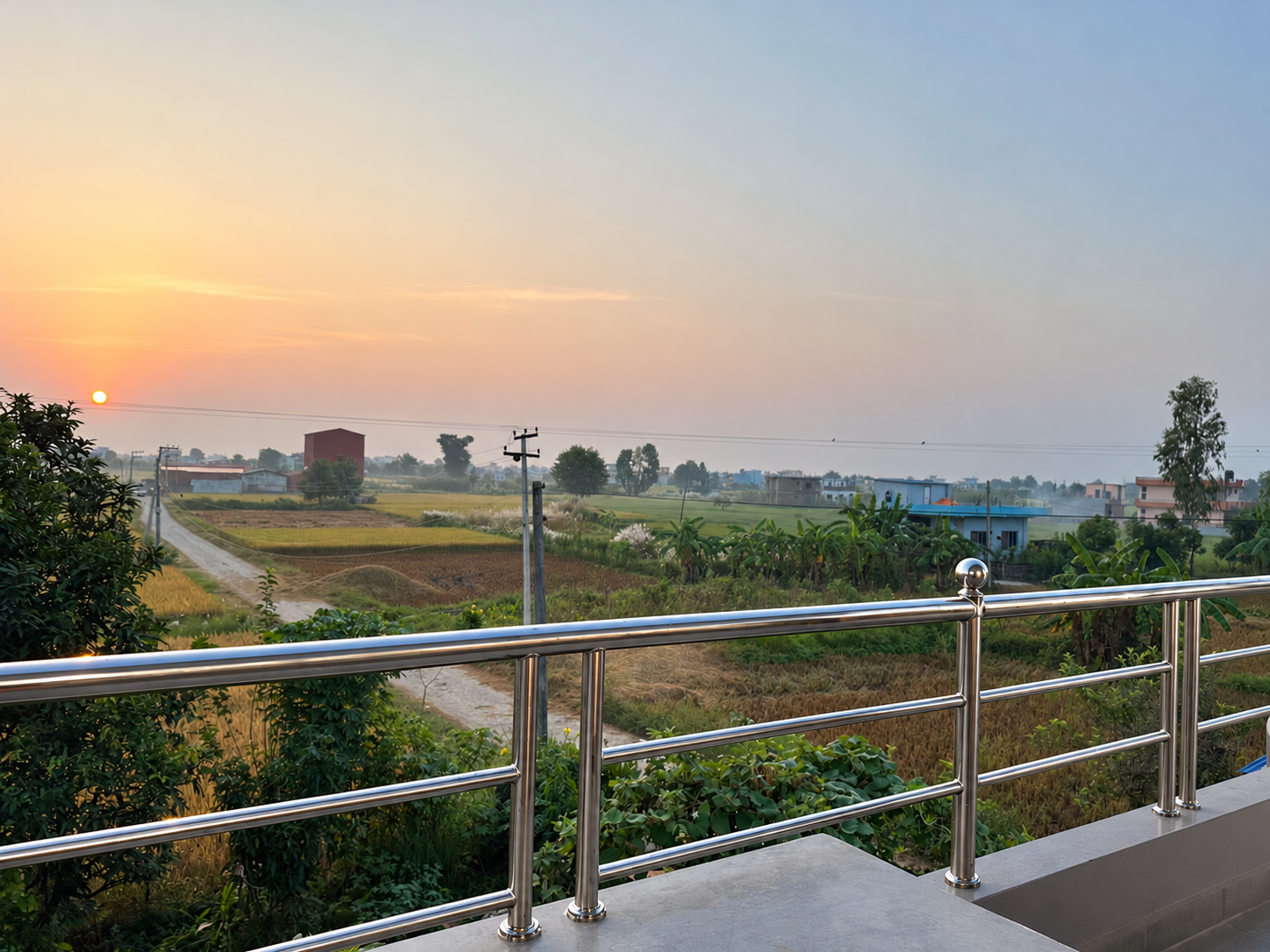
Where to stay for Lumbini? For most travellers, the best base is not inside Lumbini at all, but a quiet village between Butwal and Bhairahawa, 45–60 minutes from the Maya Devi Temple.
Where you sleep decides how Lumbini feels.
Most visitors rush it. They fly into Bhairahawa, drive to the temple, walk the Sacred Garden at midday in the heat, and leave the same afternoon. Others book a room in Lumbini village and find there is very little to do once the monasteries close. Both miss what makes this corner of Nepal special: early mornings, the slow monastic zone, and the green Terai countryside around it.
This guide covers the three areas people choose to stay in, what rooms cost in each, how far each is from the temple, what Lumbini costs to enter in 2027, how many days you really need, a timed 2-day plan, the Buddhist sites nearby that almost nobody visits, and how to get here from Kathmandu, Pokhara, Chitwan or India. It also explains honestly when our own guesthouse, Greenkunja, is the right choice, and when it is not.
“We have two days for Lumbini between Chitwan and the Indian border. Should we stay in Lumbini itself, or is there somewhere nicer and quieter nearby?”
A question our family’s tour guests have asked us for years
Quick answer: Stay in Lumbini village to walk to the temple at sunrise. Stay in Bhairahawa for an early flight or the Indian border. Stay in the Butwal–Tilottama area for a calmer, greener base with easy day trips. Plan two nights, and hire a car with a driver for your Lumbini day.
In This Guide
- Where is Lumbini, and why does where you stay matter?
- Where to stay for Lumbini: Lumbini village, Bhairahawa or Butwal?
- Where to stay for Lumbini on every budget
- Lumbini at a glance
- How far is Greenkunja from Lumbini and the airport?
- What does Lumbini cost to visit in 2027?
- How many days do you need in Lumbini?
- What is the best time of day to visit the Maya Devi Temple?
- What to see inside the Lumbini Development Zone
- A timed 2-day Lumbini plan
- The Buddhist sites near Lumbini most people miss
- Is Butwal worth a stop?
- How do you get to Lumbini?
- Getting around: car with driver, taxi or bicycle?
- When is the best season to visit Lumbini?
- What should you wear and bring?
- Food, cash and safety: what to know
- What is it like to stay at Greenkunja?
- Who is Greenkunja right for, and who should stay elsewhere?
1. Where is Lumbini, and why does where you stay matter?
Lumbini is in Rupandehi district, in the flat Terai plains of southern Nepal, close to the Indian border. It is where Queen Maya Devi gave birth to Siddhartha Gautama, the Buddha, and it has been a UNESCO World Heritage Site since 1997.
The holy area itself, the Lumbini Development Zone, is large and spread out. But the towns around it are where the hotels, restaurants, buses and the airport are. That is why your choice of base matters more here than in most places: it decides how long you sit in a car, what you eat at night, and how early you can reach the temple.
- Where: Rupandehi district, Lumbini Province, Nepal
- Nearest airport: Gautam Buddha International Airport, Bhairahawa
- Nearest big town: Butwal, about 40 km from Lumbini by road
- Nearest border crossing to India: Sunauli–Belahiya
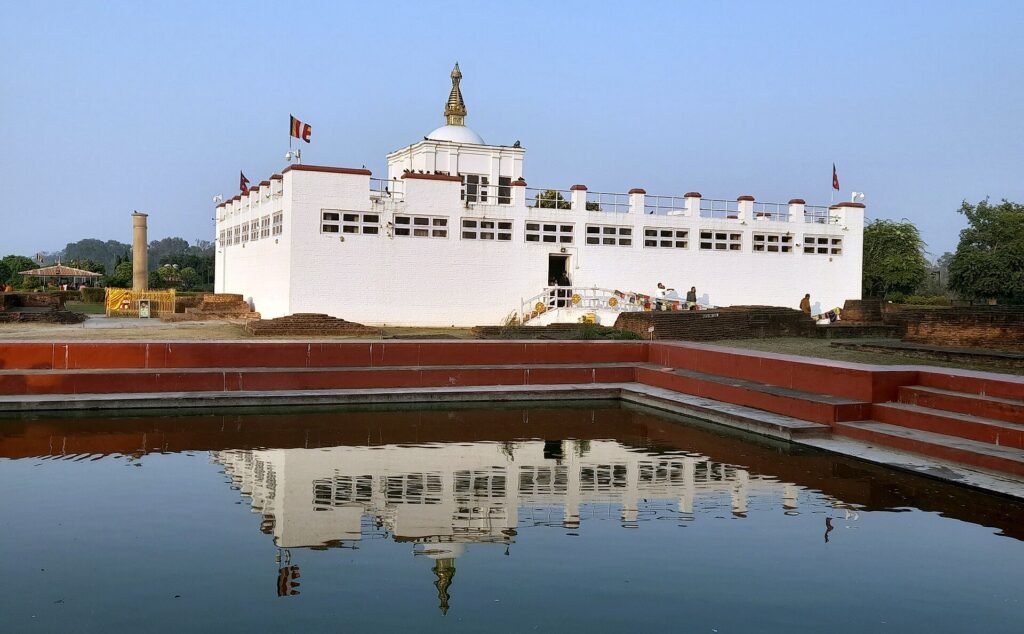
Insider tip: Lumbini, Bhairahawa (also called Siddharthanagar), Butwal and Tilottama all sit within an hour of each other. Think of them as one area, and choose the base that suits how you like to travel.
2. Where to stay for Lumbini: Lumbini village, Bhairahawa or Butwal?
There is no single best area. There is the best area for you. This is how we explain it to the travellers our family drives.
Lumbini village puts you closest to the temple. You can walk or cycle to the Sacred Garden at sunrise. The downside is that the village is quiet to the point of being empty in the evening, and food choices are limited.
Bhairahawa (Siddharthanagar) is a busy border and airport town. It is practical if you fly in late, fly out early, or cross to India at Sunauli. It is not a place most people want to spend a slow day.
Butwal and Tilottama sit where the plains meet the first hills. Butwal is the region’s biggest town, with shops, cafes and buses to Pokhara and Kathmandu. Tilottama, just south of Butwal, is greener and quieter, with rice fields, small villages and wide skies. This is where Greenkunja is.
| Area | Drive to Maya Devi Temple | Best for | Watch out for |
|---|---|---|---|
| Lumbini village | 5–10 min | Sunrise at the temple, pilgrims, meditation stays | Very quiet evenings, few restaurants |
| Bhairahawa (Siddharthanagar) | About 30 min | Early flights, crossing to India at Sunauli | Busy, dusty, little to do |
| Butwal town | About 1 hour | Shops, food, buses to Pokhara and Kathmandu | Traffic and city noise |
| Tilottama (Greenkunja) | About 45–60 min | A calm base, day trips, families, longer stays | You need a car or taxi for sightseeing |
Insider tip: If you can only stay one night and want the temple at dawn, stay in Lumbini village. If you have two nights or more, a quieter base outside Lumbini usually makes the whole trip feel easier.
3. Where to stay for Lumbini on every budget
Rooms around Lumbini are cheap by world standards. What changes between areas is less the price and more what is around you after dark.
| Area | Budget | Mid-range | Top end | Good to know |
|---|---|---|---|---|
| Lumbini village | Simple lodges from about USD 7–15 | Hotels from about USD 30 | Few true luxury options | Closest to the temple; book ahead around Buddha Jayanti |
| Bhairahawa (Siddharthanagar) | Guesthouses near the bus park | Average around USD 33 | Tiger Palace Resort, a 5-star casino resort, about USD 80–110 | Handy for the airport and the border |
| Butwal | Business hotels in town | Mid-range business hotels | Hyatt Place Butwal | Best choice of restaurants and shops |
| Tilottama (Greenkunja) | About USD 29 for one adult, breakfast included | – | – | A family guesthouse among rice fields |
Prices can change at any time. Room rates change daily with the season, festivals and demand. Treat these as rough guides and check live prices before you book.
- Monastery stays: some monasteries have offered simple rooms to pilgrims in the past; ask locally, and do not count on it
- Peak dates: Buddha Jayanti (Buddha’s birthday) and the October–November season fill rooms first
- Power cuts: rare today, but ask any hotel whether it has backup power if you need air conditioning in May or June
Insider tip: Price is rarely the deciding factor here. Decide first whether you want sunrise at the temple or a quieter base, then pick the room.
4. Lumbini at a glance
| What | Details |
|---|---|
| Main sight | Maya Devi Temple, the marker stone of the Buddha’s birth, the Ashoka Pillar and the Puskarini pond |
| Layout | A large planned zone: the Sacred Garden in the south, a long canal, and the monastic zone on both sides |
| Monasteries | Theravada monasteries on the east side, Mahayana and Vajrayana on the west side |
| Entry | A conservation fee for visitors (see section 6) |
| Time needed | Half a day for the highlights, a full day to see it properly |
| Best light | Early morning and late afternoon |
| Nearest airport | Gautam Buddha International Airport, Bhairahawa |
| Managed by | Lumbini Development Trust |
5. How far is Greenkunja from Lumbini and the airport?
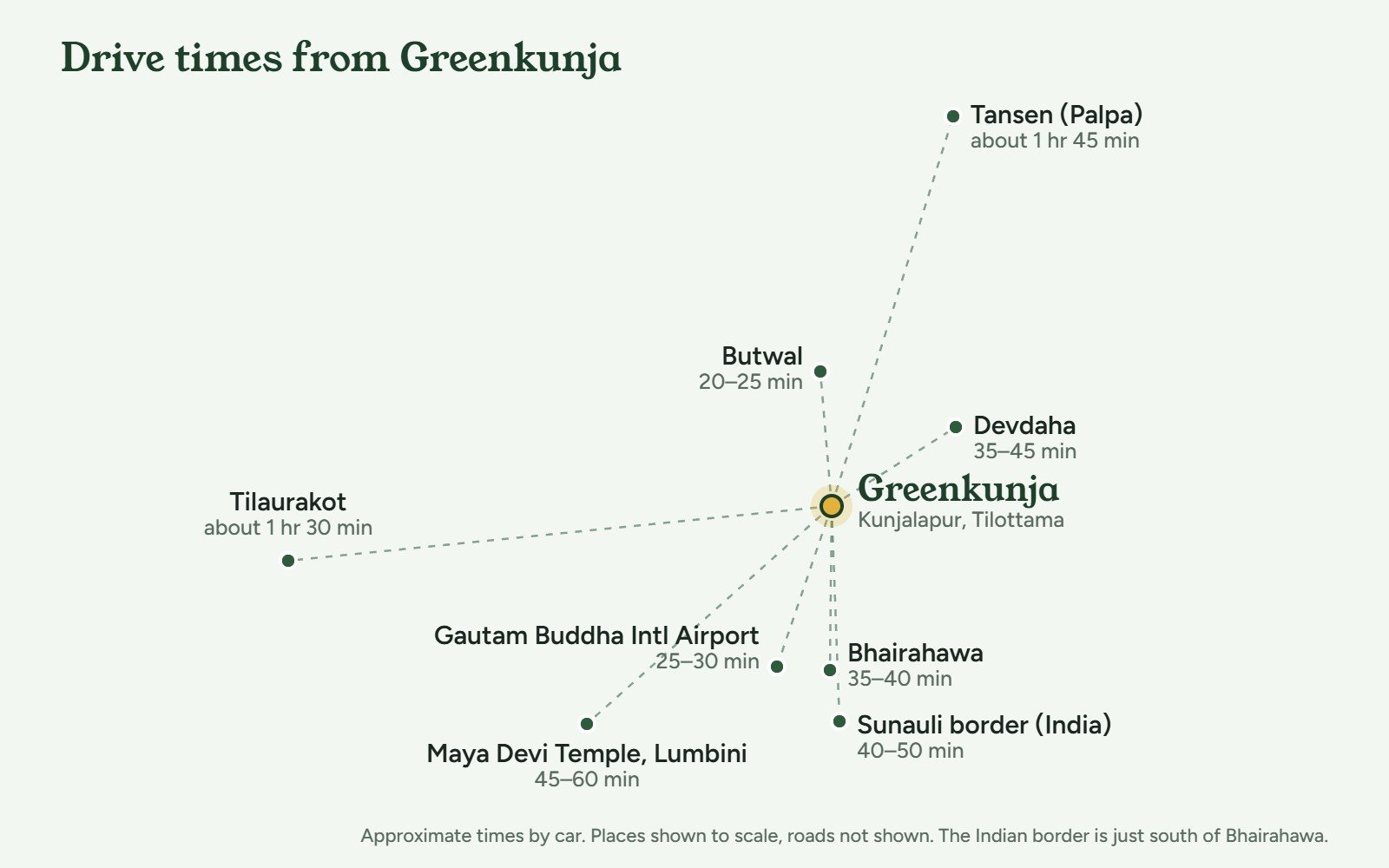
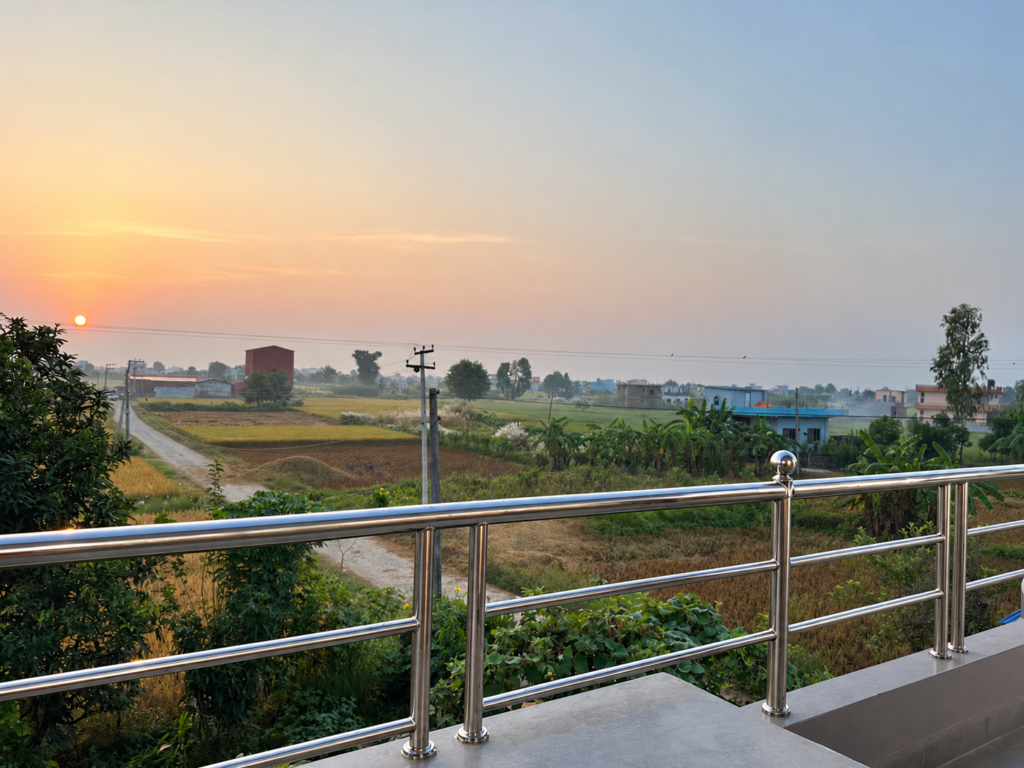
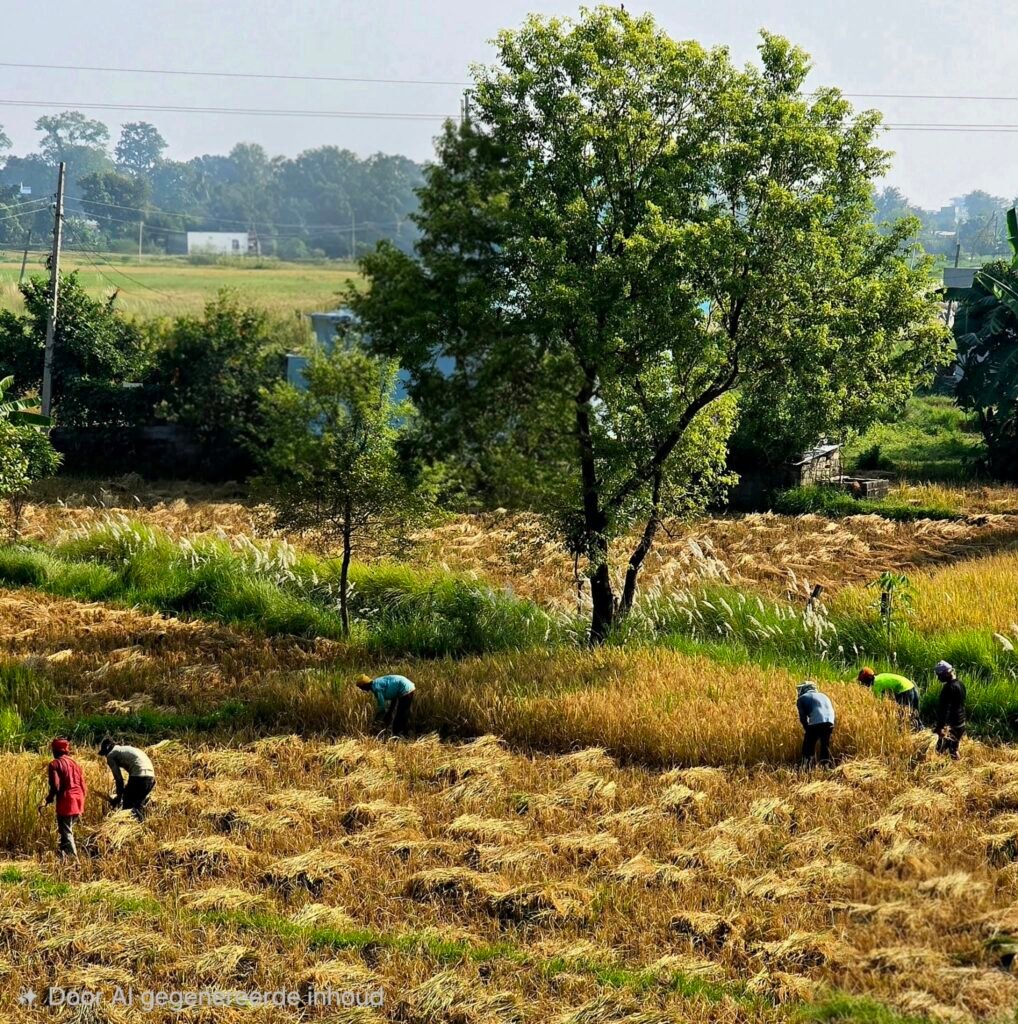
Greenkunja is in Kunjalapur-6, Tilottama, in Rupandehi district. It sits among rice fields, a short drive south of Butwal and north of the airport. From our terrace you look straight out over the fields, and most mornings you can watch people working them at sunrise.
| From Greenkunja to | Distance (approx.) | Drive (approx.) |
|---|---|---|
| Butwal town centre | 10 km | 20–25 min |
| Gautam Buddha International Airport | 15 km | 25–30 min |
| Siddha Baba Temple | 12 km | 25 min |
| Sunauli–Belahiya border (India) | 25 km | 40–50 min |
| Maya Devi Temple, Lumbini | 30–35 km | 45–60 min |
| Devdaha | 20 km | 35–45 min |
| Tansen (Palpa) | 50 km | About 1 hr 45 min |
| Tilaurakot (Kapilvastu) | 60 km | About 1 hr 30 min |
Insider tip: The airport is only 25–30 minutes away. If you have an early flight, tell us when you book, so we can plan an early breakfast or help you book a taxi.
6. What does Lumbini cost to visit in 2027?
Lumbini is cheap to visit compared with most World Heritage Sites. The main charge is a conservation fee set by the Lumbini Development Trust, and it differs by nationality. In May 2026 the Trust raised its fees, by up to 75% for visitors from outside South Asia, so older blogs often show the wrong numbers.
These are the figures on the Lumbini Development Trust fee page in October 2026:
| Fee | Nepali | Indian | SAARC + Myanmar | Other nationalities |
|---|---|---|---|---|
| Conservation fee (per day) | NPR 20 | NPR 80 | NPR 700 | NPR 1,000 |
| Still camera (per day) | NPR 100 | NPR 100 | USD 3 | USD 3 |
| Video camera (per day) | NPR 1,000 | NPR 1,000 | USD 25 | USD 25 |
| Meditation pass (12 days) | Free | NPR 500 | NPR 1,000 | NPR 1,500 |
Prices can change at any time. These fees come from the official page and may be updated without notice. Please check at the ticket counter or on the official e-ticket site before you go.
- Pay with: cash at the counter, a QR code, or online
- Free entry: monks, nuns, people with disabilities and local residents of the three surrounding districts
- Drones: not allowed without permission from three different offices; leave yours at home
Insider tip: Keep your ticket all day. Guards check it at the Sacred Garden gate, and you may want to go back in for the late-afternoon light.
7. How many days do you need in Lumbini?
One full day is enough to see the Maya Devi Temple, the Sacred Garden and the best monasteries without rushing. Two days lets you add the places around Lumbini that tell the Buddha’s whole life story, not just his birth.
| Time you have | What you can see | Our honest view |
|---|---|---|
| Half a day | Maya Devi Temple, Sacred Garden, 2–3 monasteries | Possible, but rushed and usually in the midday heat |
| 1 day | Temple at opening, monastic zone by bicycle, Peace Pagoda, sunset | The minimum we recommend |
| 2 days | Day 1 Lumbini; day 2 Tilaurakot and Kapilvastu, or Devdaha | The best balance for most travellers |
| 3 days or more | Add the Palpa hills, Ramagrama, meditation, slow village days | For pilgrims, photographers and people who want to rest |
Insider tip: If you are travelling from Chitwan or Pokhara to India, two nights here breaks up a very long road day and turns it into part of the holiday.
8. What is the best time of day to visit the Maya Devi Temple?
Go early. The light is soft, the air is cool, and you share the Sacred Garden mostly with monks and pilgrims at their morning prayers. By late morning, groups arrive by the busload, and from April to June the midday heat on the open paths is hard work.
- Best: the first hour after opening
- Second best: the last two hours before closing, when the prayer flags glow in the low sun
- Avoid: 11 a.m. to 3 p.m. in the hot months
- Opening hours: the temple opens early in the morning and closes in the evening; hours can change with the season and festivals, so confirm with the Lumbini Development Trust on +977-71-404040
Insider tip: From Greenkunja, leave at about 6 a.m. to reach the temple early. You will have seen the best of it before the heat arrives, with the afternoon free to rest.
9. What to see inside the Lumbini Development Zone
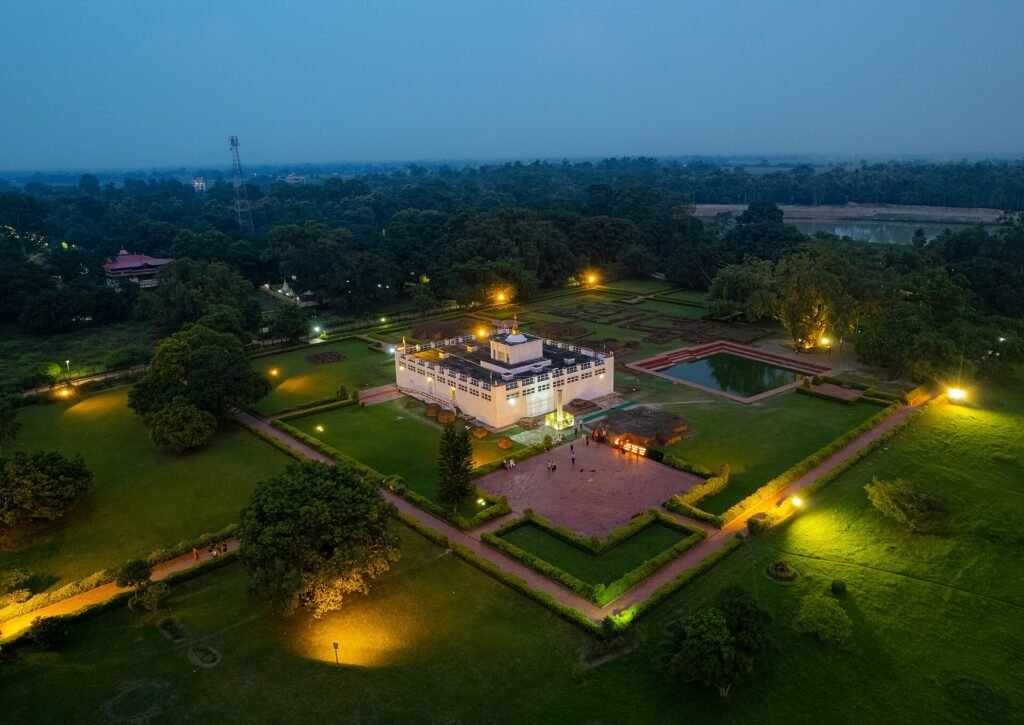
The zone is long and straight, built around a canal that runs north to south. The Sacred Garden with the Maya Devi Temple is at the southern end. The monasteries line both sides of the canal, and the World Peace Pagoda and the museum are further north.
The Maya Devi Temple. Inside a simple white building are the excavated brick ruins of older shrines going back to the time of Emperor Ashoka in the 3rd century BCE, and the marker stone that shows the spot of the birth. You walk around it on a raised path. Shoes come off at the door, and photos are not allowed inside.
The Ashoka Pillar. Next to the temple stands the stone pillar that Emperor Ashoka put up when he visited. It was found again in 1896, and its inscription is the evidence that this is the birthplace.
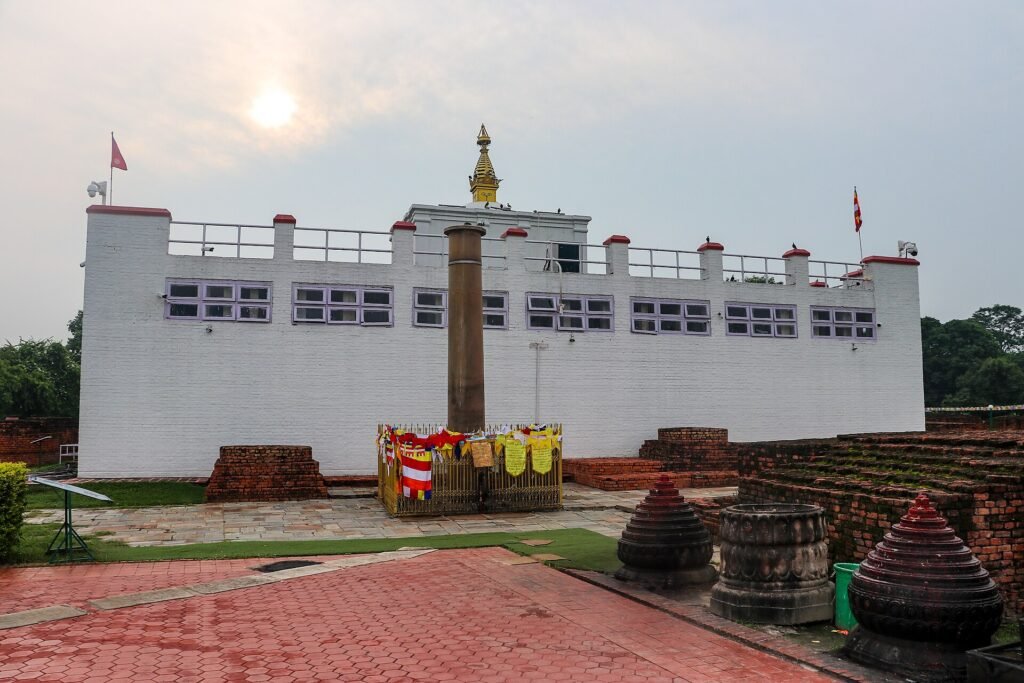
Puskarini pond. The holy pond where Maya Devi is believed to have bathed before the birth, and where the newborn Buddha was first washed.
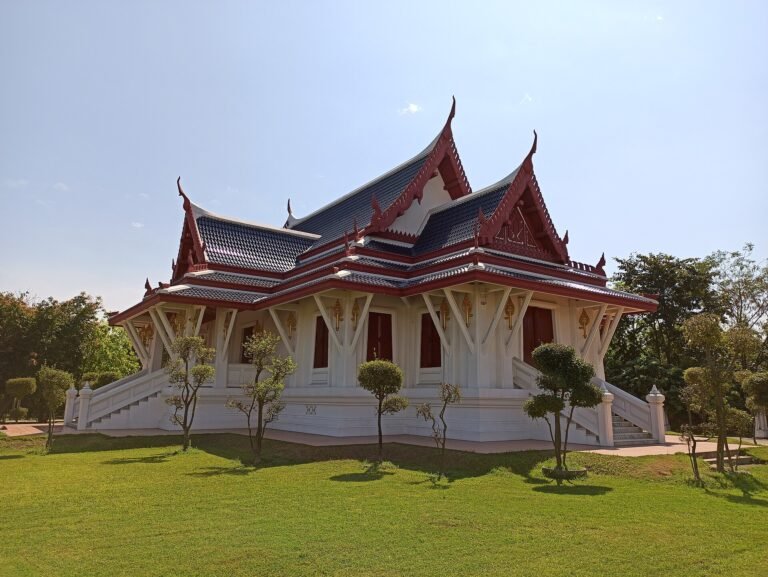
The monastic zone. Countries from across the Buddhist world have built their own monasteries here. Theravada monasteries, such as Myanmar’s and Thailand’s, are on the east side. Mahayana and Vajrayana monasteries, such as China’s, Germany’s and Vietnam’s, are on the west side. Each looks completely different, which is the joy of it.
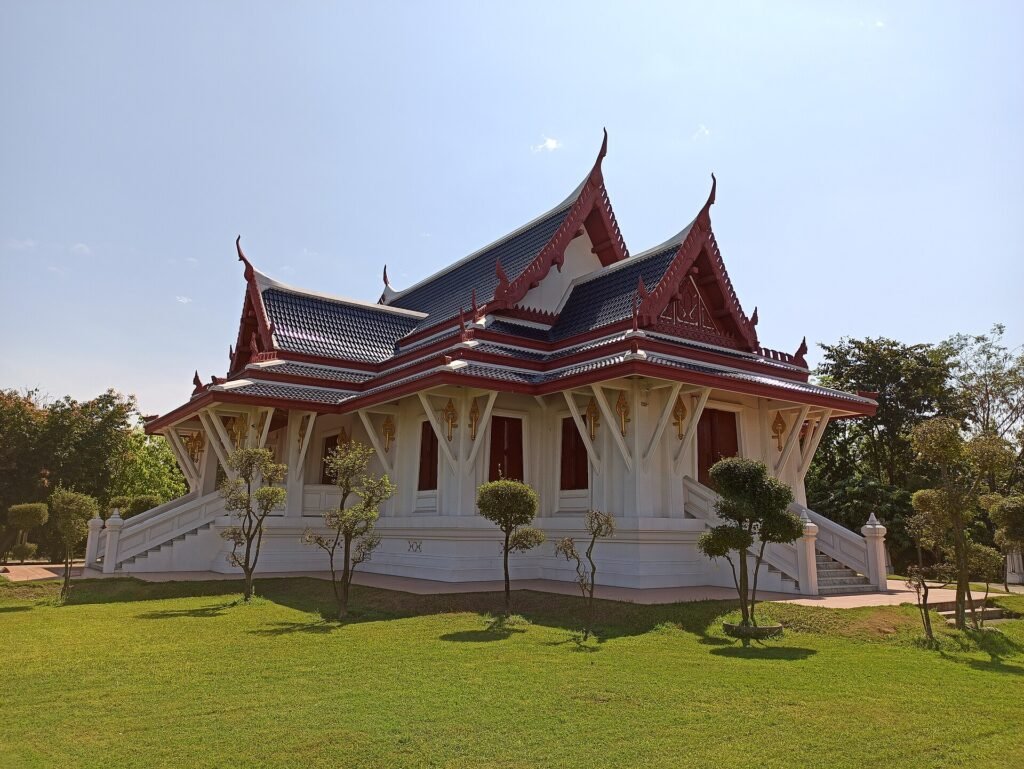
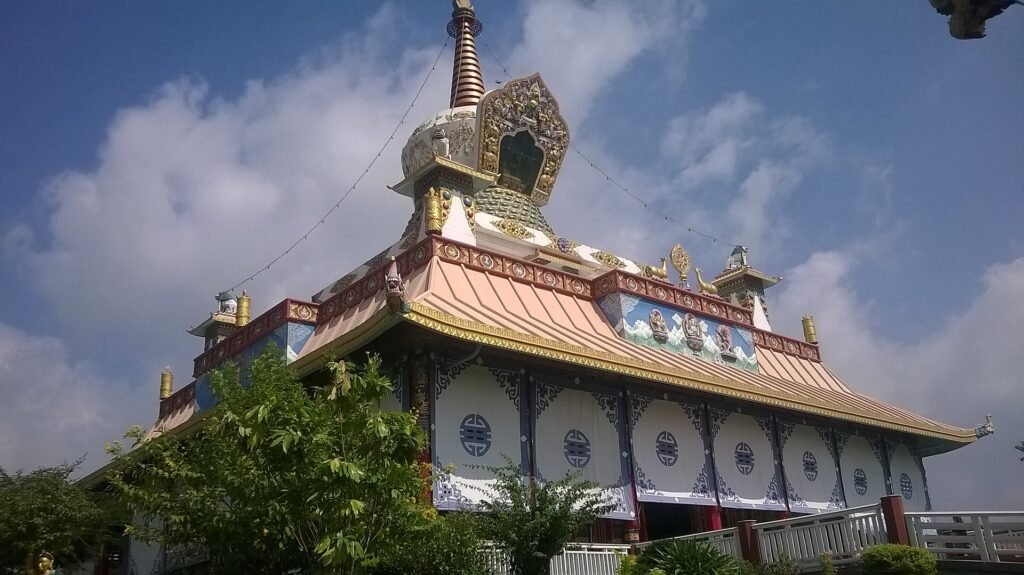
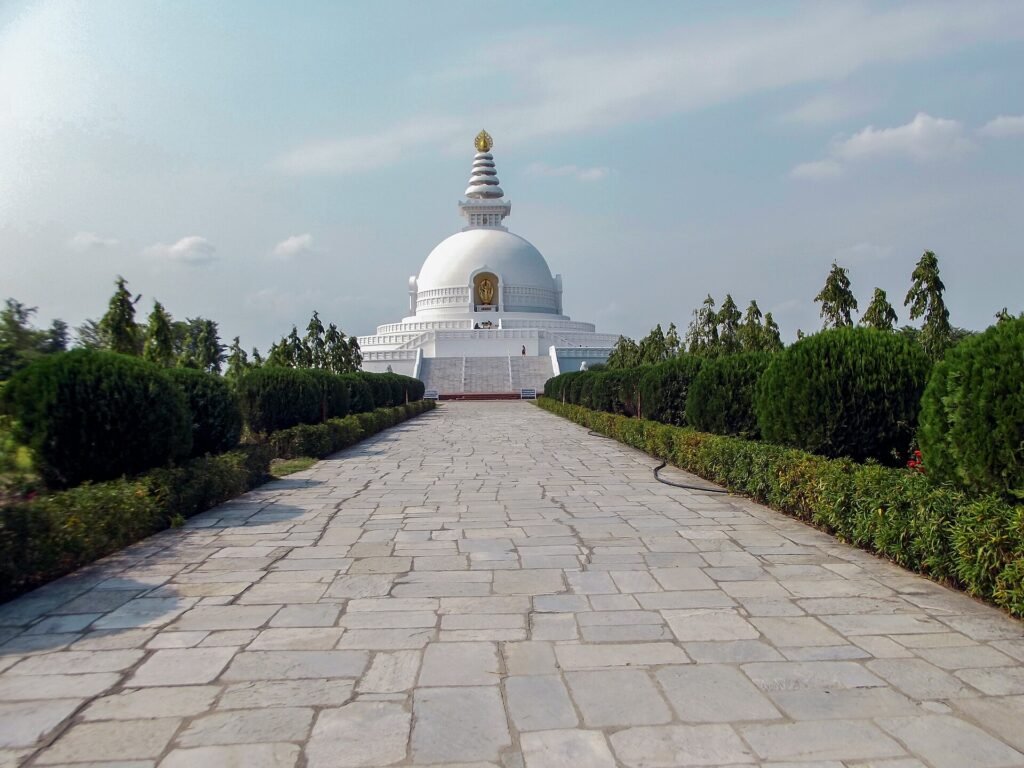
The World Peace Pagoda. A large white stupa built by a Japanese Buddhist order, at the northern end. It is very peaceful in the late afternoon.
Insider tip: Do not try to see every monastery. Choose four or five that look different from each other, and spend real time in each.
10. A timed 2-day Lumbini plan
This is the plan our family uses for tour guests. It keeps you out of the midday heat and leaves time to rest.
Day 1: Lumbini
| Time | What you do |
|---|---|
| 6:00 | Leave Greenkunja with your driver |
| 6:45 | Arrive at the Lumbini Development Zone and buy tickets |
| 7:00–9:00 | Maya Devi Temple, marker stone, Ashoka Pillar, Puskarini pond |
| 9:00–12:00 | Monastic zone by bicycle or rickshaw: 4–5 monasteries on both sides |
| 12:00–14:30 | Lunch and a rest, out of the sun |
| 14:30–16:30 | World Peace Pagoda and the northern end of the zone |
| 16:30–17:30 | Back to the Sacred Garden for the evening light |
| 18:30 | Back at Greenkunja for a quiet evening on the terrace |
Day 2: the Buddha’s family places
| Time | What you do |
|---|---|
| 7:30 | Breakfast at Greenkunja |
| 8:30 | Drive west to Tilaurakot, about 1 hr 30 min |
| 10:00–12:00 | Tilaurakot: ruins of the palace town where Siddhartha grew up |
| 12:00–13:00 | Kudan, where he met his family again after enlightenment |
| 13:00–14:00 | Lunch in Taulihawa |
| 14:00–15:30 | Gotihawa or Niglihawa, two quiet sites with Ashoka pillars |
| 17:00 | Back at Greenkunja for sunset over the fields |
Insider tip: Prefer a shorter day 2? Swap Tilaurakot for Devdaha, the home of Maya Devi’s family, which is much closer to us, and spend the afternoon resting.
11. The Buddhist sites near Lumbini most people miss
Lumbini is only the first chapter. Within a day’s drive are the places where the Buddha grew up, where his mother’s family lived, and where his relics were kept. Most visitors never see them, so you often have them almost to yourself.
| Site | What it is | Where |
|---|---|---|
| Tilaurakot | Ruins of the ancient Kapilvastu palace town, where Siddhartha lived for 29 years | About 28 km west of Lumbini |
| Kudan | Where he met his father, wife and son after enlightenment; three stupas and a pond | About 6 km from Tilaurakot |
| Gotihawa | Birthplace of Krakuchhanda Buddha; a broken Ashoka pillar and an old stupa | About 7 km from Tilaurakot |
| Niglihawa | Birthplace of Kanakmuni Buddha; a broken Ashoka pillar and Nigli Sagar pond | About 9 km from Tilaurakot |
| Devdaha | Home of Maya Devi’s family, on the eastern side of the region | Closer to Butwal and Tilottama than to Lumbini |
| Ramagrama | A stupa said to hold relics of the Buddha, still an unopened grassy mound | South-east, near Parasi |
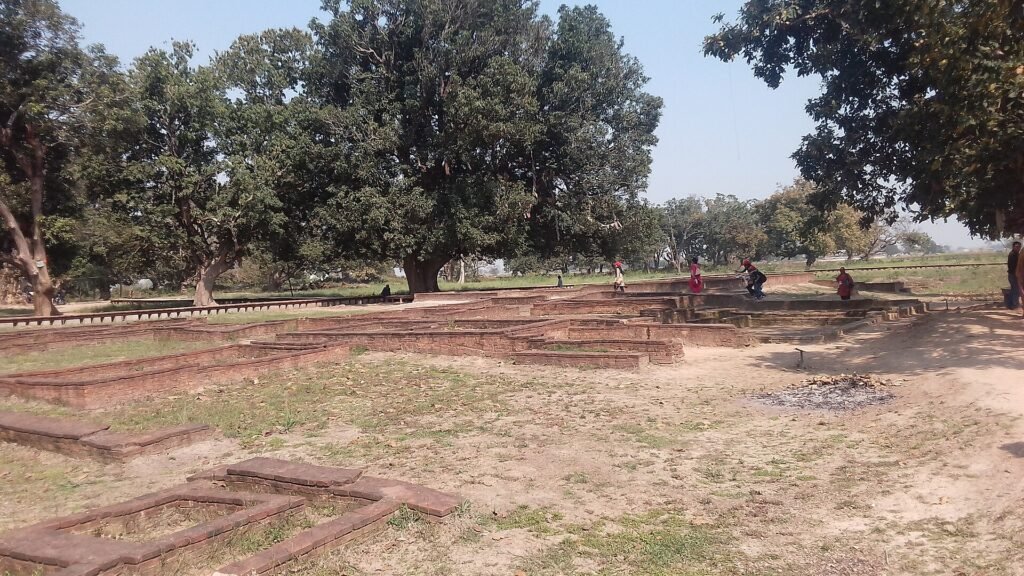
Insider tip: If you only add one site, make it Tilaurakot. Standing at the old east gate, where Siddhartha is said to have left the palace, is quietly moving.
If you are following the Buddha’s footsteps across two countries, our family company GoIndiaNepal runs a private Buddhist Circuit Tour through Varanasi, Sarnath, Bodh Gaya, Nalanda, Kushinagar and Lumbini, with one driver for the whole trip. Their India and Nepal pilgrimage guide explains how the sites fit together.
12. Is Butwal worth a stop?
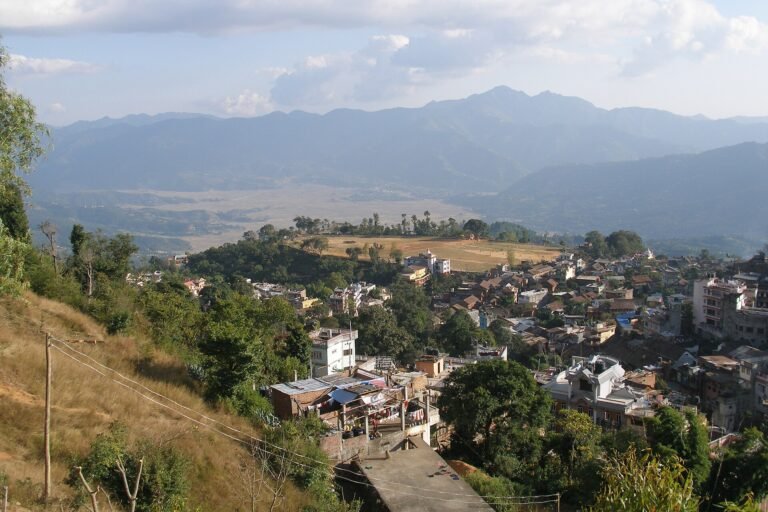
Yes, for half a day. Butwal is not a tourist town, which is part of its charm. It is where the Siddhartha Highway leaves the plains and climbs into the hills towards Pokhara, so the setting is lovely: the Tinau River on one side and green ridges on the other.
- Siddha Baba Temple: a busy Shiva temple in the gorge just north of town; lively in the mornings
- Manimukunda Sen Park: gardens and old palace ruins on the hillside, with views over the town
- Jit Gadhi: an old fort from the Anglo-Nepal war, with a small museum
- Batauli Bazaar: the old market area, best in the early evening
- Tinau River walk: pleasant in the late afternoon
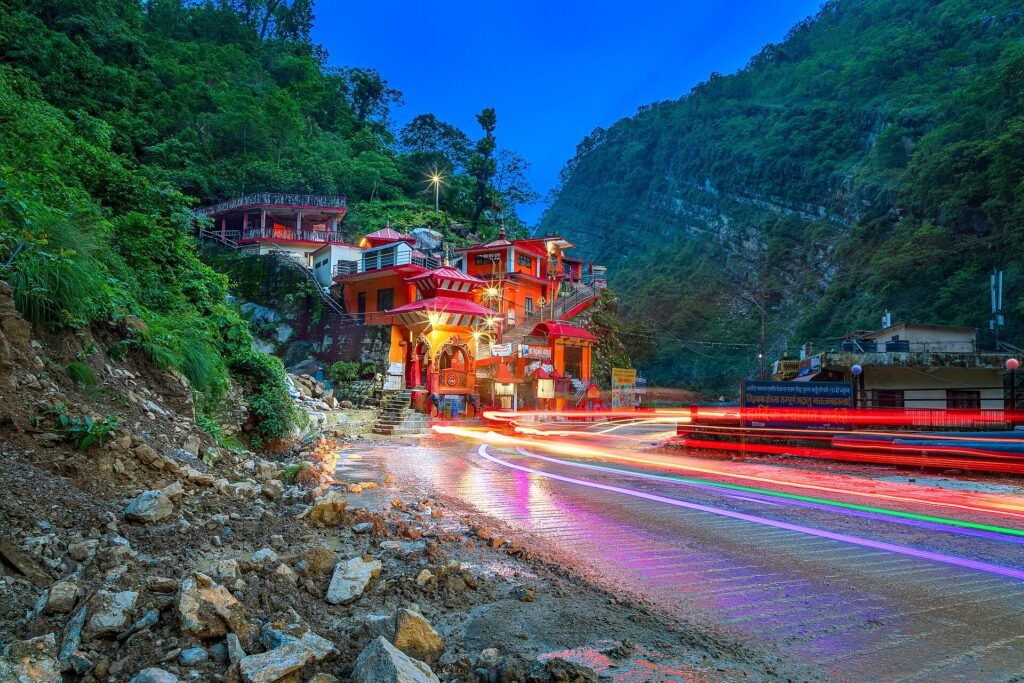
Insider tip: If you are heading to Pokhara next, stop in Tansen in the Palpa hills on the way. It is an old Newar hill town with cobbled lanes and a Himalayan view on clear days. GoIndiaNepal’s Pokhara travel guide covers what to do when you arrive.
13. How do you get to Lumbini?
Lumbini is easy to reach from anywhere in Nepal and from northern India. The only question is how much time you want to spend on the road.
| From | By | Time (approx.) | Notes |
|---|---|---|---|
| Kathmandu | Flight to Bhairahawa | About 30 min | Buddha Air runs several daily flights (Buddha Air) |
| Kathmandu | Car or tourist bus | 8–10 hrs | Long; break it in Chitwan or Bandipur |
| Pokhara | Car via Tansen | 6–8 hrs | One of Nepal’s most beautiful hill roads |
| Chitwan (Sauraha) | Car | 4–5 hrs | Flat road along the Terai, with road works on some stretches |
| Varanasi, India | Car via Sunauli | A full day | Cross the border at Sunauli–Belahiya |
| Abroad | Flight to Gautam Buddha International Airport | Varies | Only a few international routes run, and they change often; check before you plan |
Insider tip: Flying in from Kathmandu and driving back by road through Chitwan gives you the best of both: no long day at the start, and the jungle on the way back.
Starting your trip in India? Our family’s Private India Tours with Driver: Golden Triangle & Rajasthan cover Delhi, Agra, Jaipur and the rest of Rajasthan, and can end at the Nepal border so you continue straight to Lumbini.
GoIndiaNepal’s Varanasi to Kathmandu by road tour follows exactly this route: Varanasi, Kushinagar, Lumbini, Chitwan and Kathmandu, by private car.
14. Getting around: car with driver, taxi or bicycle?
Inside the Lumbini Development Zone, distances are long and flat. A bicycle or a cycle rickshaw is the nicest way to move between monasteries. To get there from Tilottama, and to reach the other Buddhist sites, you need a car.
- Car with driver: the easiest option; your driver waits while you visit and knows the roads
- Taxi: fine for a single return trip to Lumbini; agree the price before you leave
- Local bus: cheap and very slow, with changes in Bhairahawa; not ideal in the heat
- Bicycle or e-rickshaw: for inside the zone only; available near the gates
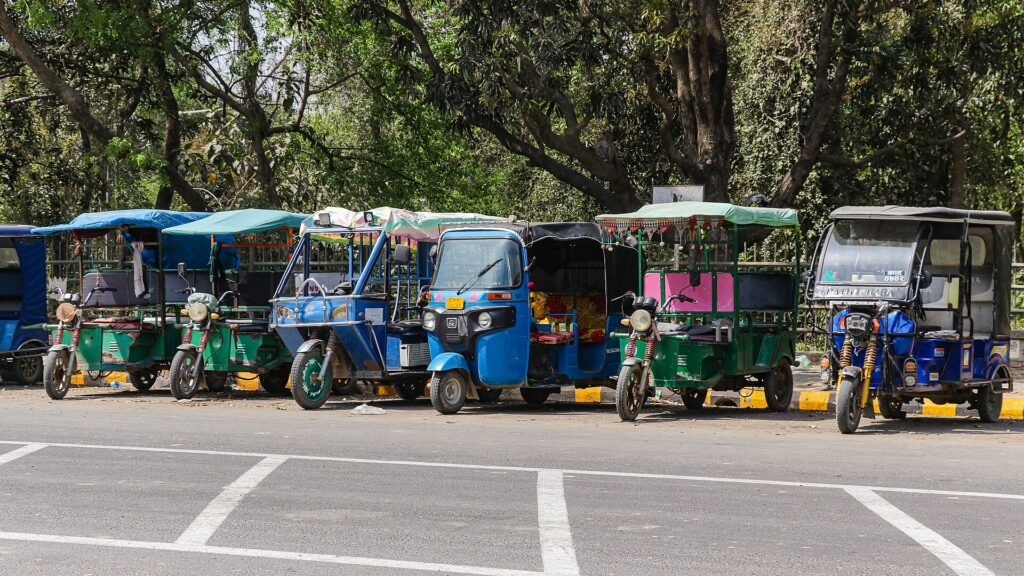
We can help you arrange a car. For longer trips across Nepal, GoIndiaNepal provides private cars with English-speaking drivers in Nepal, so you can continue to Chitwan, Pokhara or Kathmandu with the same driver. Wondering what to tip? Read their honest guide to tipping drivers in India and Nepal.
Insider tip: Book the car for the whole day, not just the drive. Then you can return to the Sacred Garden for the evening light without hunting for a ride.
15. When is the best season to visit Lumbini?
The Terai is hot. That one fact shapes the best time to come.
| Season | Months | What it is like |
|---|---|---|
| Autumn | October–November | Clear skies, warm days, green and golden rice fields. The best time. |
| Winter | December–February | Pleasant days, cold nights, and morning fog that can delay flights |
| Spring | March–April | Warm, getting hot by April; Buddha Jayanti often falls in late April or May |
| Summer | May–June | Very hot; plan only early mornings and evenings outside |
| Monsoon | July–September | Heavy rain at times, very green, fewer visitors |
Insider tip: If you come in December or January, avoid a very early flight out of Bhairahawa. Thick fog often clears only by mid-morning.
16. What should you wear and bring?
Lumbini is a holy place for millions of people, and a lot of walking on open paths. Dress for both.
- Clothes: shoulders and knees covered; light, loose cotton in the warm months
- Shoes: easy to slip off, because you remove them at the temple and most monasteries
- Sun: hat, sunglasses and sunscreen; there is little shade between buildings
- Water: at least one litre each; refill where you can
- Cash: Nepali rupees for tickets, rickshaws, tea and donations
- Respect: walk clockwise around stupas and shrines, speak quietly, and ask before photographing monks
- Leave behind: drones, and food or drink inside the temple
Insider tip: Pack socks. The stone and brick paths around the temple get very hot by midday.
17. Food, cash and safety: what to know
Lumbini is calm and easy for visitors. A little planning on food, cash and heat makes it easier still.
- Food: simple restaurants and tea shops cluster around Lumbini Bazaar near the main gate; inside the zone, shops are few, so carry water and a snack
- What to eat: dal bhat (rice, lentils and curry) is the everyday meal and almost always vegetarian; Butwal has the widest choice of restaurants
- Cash: Bhairahawa and Butwal have many banks and ATMs; Lumbini village has far fewer, so arrive with enough Nepali rupees
- Safety: the area is generally safe and relaxed; the real risks are heat, fast traffic on the highways, and losing track of bags in crowds at festival time
- Border: carry your passport and visa papers when you travel near Sunauli, and check the crossing hours before a late-evening drive
Insider tip: Eat your main meal at lunch outside the zone, when the sun is highest, and save the walking for the cooler hours.
18. What is it like to stay at Greenkunja?
Greenkunja is our family’s new guesthouse in Kunjalapur, a farming village in Tilottama. We are opening with one room, a 25 m² double with a terrace over the rice fields. Two more rooms are on the way. See the room and the photos.
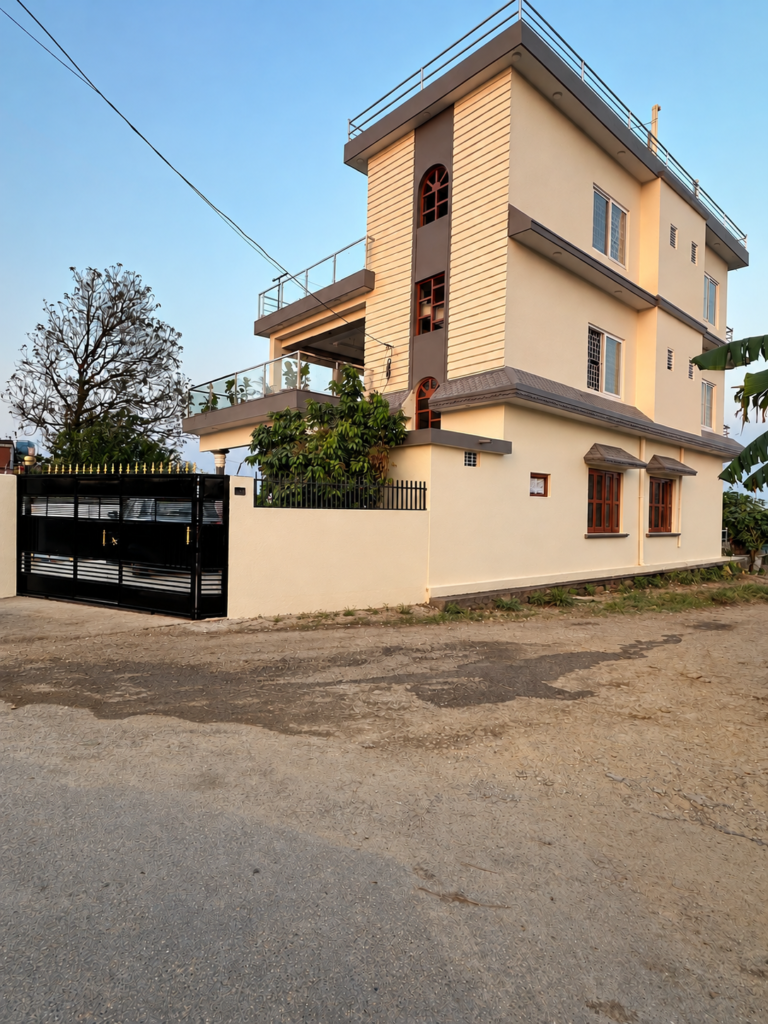
| What you get | Details |
|---|---|
| Room | Double room with terrace, 1 large double bed, 25 m² |
| Bathroom | Private, ensuite |
| Comfort | Air conditioning, towels and bed linen, kettle, dining area |
| Breakfast | Included: continental, English, or from the menu (as listed on Booking.com) |
| Connection | Free WiFi |
| Parking | Free private parking |
| Outside | Terrace and garden view over the rice fields |
| Check-in | 12:00 to 22:00 |
| Check-out | 07:00 to 11:00 |
| Rules | Non-smoking, no pets, no parties; children welcome, but no cots or extra beds |
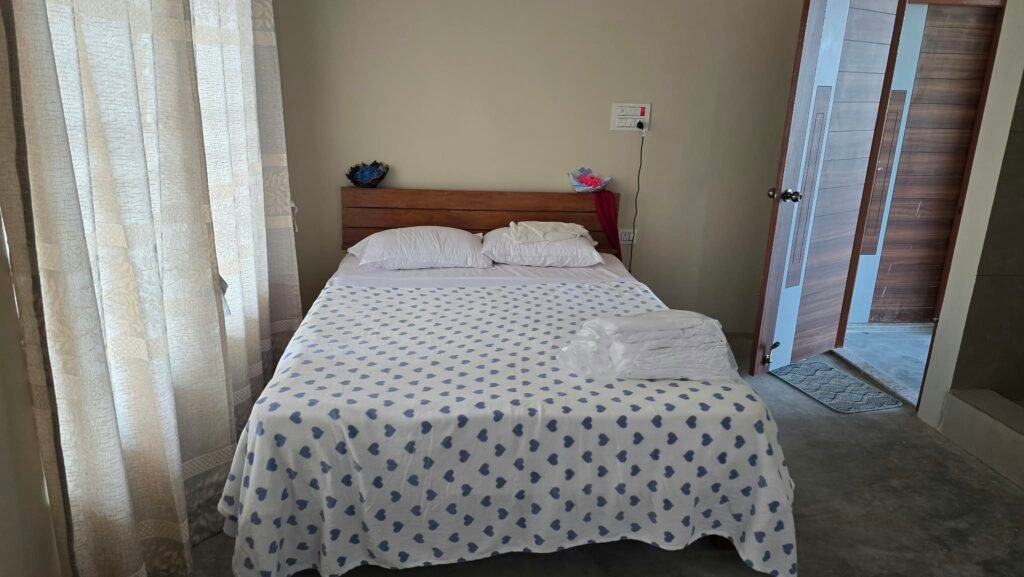
On Booking.com, the room is listed at about USD 29 per night for one adult, breakfast included, with free cancellation on many dates.
Prices can change at any time. The rate changes with the season, the dates and the number of guests. Please check the current price on Booking.com or ask us directly on WhatsApp.
Insider tip: Book directly with us on WhatsApp and tell us your plans for Lumbini. We can suggest the best order for your days and help you book a car.
19. Who is Greenkunja right for, and who should stay elsewhere?
We would rather you are happy than booked with us. So here is our honest view.
Greenkunja is right for you if:
- you want a calm, green base for two or more nights
- you like seeing real village life: farmers in the fields, birdsong, no traffic
- you are travelling by car between Chitwan, Pokhara and India and want to break the journey
- you have an early flight from Bhairahawa and want somewhere quieter than the airport town
You may be happier elsewhere if:
- you want to walk to the Maya Devi Temple at sunrise without a car; stay in Lumbini village
- you want restaurants, bars and shops on your doorstep; stay in Butwal town
- you are a large group; we have one room for now
- you are arriving without any transport and want to explore on foot
Insider tip: Not sure? Message us with your dates and plans. We will tell you honestly whether we are the right fit.
How to stay with us and see Lumbini
There are two simple ways to do this.
1. Stay at Greenkunja and see Lumbini on day trips. Book the room directly with our family on WhatsApp, or on Booking.com. We can help you arrange a car with a driver for your Lumbini day and for the sites around it.
2. Make Lumbini part of a bigger private tour. Our family has run tailor-made tours across India and Nepal since 1996 as GoIndiaNepal. Lumbini fits naturally into these routes:
| Tour | Route | Price for the whole car (from) |
|---|---|---|
| Varanasi to Kathmandu by Road, 7 days | Varanasi, Sarnath, Kushinagar, Lumbini, Chitwan, Kathmandu | USD 623 (sedan), USD 854 (SUV) |
| Buddhist Circuit Tour, 9 days | Varanasi, Sarnath, Bodh Gaya, Nalanda, Kushinagar, Lumbini | USD 801 (sedan), USD 1,098 (SUV), USD 1,440 (Tempo Traveller) |
| Nepal tours | Kathmandu, Pokhara, Chitwan, Lumbini and more, shaped around you | Price on request |
Prices can change at any time. Tour prices are taken from goindianepal.com in October 2026, are for the vehicle and driver, not per person, and may be updated without notice. Your final price is the one in your written quote.
For more ideas, read GoIndiaNepal’s guides to the best places to visit in Nepal and how to plan a combined India and Nepal trip.
Get a Fixed Price
Send us your dates, how many of you are travelling, and what you want to see. We will reply with a fixed price for your room, your car and driver, or your full tour, so there are no surprises later. Message us on WhatsApp at +91 98109 09368 (our family’s WhatsApp, answered in Nepal and India), or email info@greenkunja.com. You can also see the room and how to book.
Plan Your Lumbini Stay in Just 3 Steps
- Tell us your dates and where you are coming from: Kathmandu, Pokhara, Chitwan or India.
- We suggest a plan: how many nights, which sites, and whether you need a car, with a fixed price.
- Confirm and relax. We send the details, and your room is ready when you arrive.
Your Lumbini Checklist
- Have you decided whether you want the temple at sunrise (stay in Lumbini) or a calmer base (stay nearby)?
- Have you planned at least one full day for Lumbini?
- Have you checked the current entry fee for your nationality?
- Are you visiting early in the morning, not at midday?
- Have you booked a car with a driver, or at least a return taxi?
- Do you have clothes that cover your shoulders and knees?
- Are your shoes easy to slip on and off?
- Have you packed a hat, sunscreen and water?
- Do you have cash in Nepali rupees?
- Have you left the drone at home?
- If you have a second day, have you chosen Tilaurakot or Devdaha?
- If you are flying out in winter, have you allowed for morning fog?
Summary: A Simple Way to Think About It
One night and only the temple: stay in Lumbini village. An early flight or the Indian border next: Bhairahawa. Two or more nights, a calm green base, and day trips to the Buddha’s other places: Butwal–Tilottama. Whichever you choose, go to the temple early, give it a full day, and do not rush.
Frequently Asked Questions
Where should I stay for Lumbini?
It depends on your plans. Lumbini village is best for sunrise at the temple, Bhairahawa for early flights or the Indian border, and the Butwal–Tilottama area for a calmer base with day trips.
How far is Lumbini from Butwal?
Lumbini is about 40 km from Butwal by road, roughly an hour’s drive depending on traffic. From Greenkunja in Tilottama it is about 30–35 km, or 45 to 60 minutes.
How many days do you need in Lumbini?
One full day is enough for the Maya Devi Temple, the Sacred Garden and the main monasteries. Two days lets you add Tilaurakot, Kudan or Devdaha, the other places from the Buddha’s life.
What is the entry fee for Lumbini in 2027?
In October 2026 the Lumbini Development Trust listed a conservation fee of NPR 1,000 per day for most foreign visitors, NPR 700 for SAARC and Myanmar visitors, and NPR 80 for Indians. Fees can change at any time, so check at the counter or on the official ticket site.
What is the best time of day to visit the Maya Devi Temple?
The first hour after opening is best: cooler, quieter and with soft light. Late afternoon is the second-best time. Avoid the middle of the day in the hot months.
Can you visit Lumbini as a day trip?
Yes. Many people do it from Bhairahawa, Butwal or Tilottama with a car and driver. Start early so you finish the open-air parts before the midday heat.
What is the nearest airport to Lumbini?
Gautam Buddha International Airport in Bhairahawa. Buddha Air flies there from Kathmandu several times a day, and the flight takes about 30 minutes.
How do I get from Lumbini to Pokhara?
By road through Butwal and the Palpa hills, about 6 to 8 hours. A night in Tansen makes the journey much easier and more beautiful.
Can I cross into India from Lumbini?
Yes. The Sunauli–Belahiya border is near Bhairahawa, about 40 to 50 minutes from Greenkunja. From there, roads continue to Gorakhpur, Kushinagar and Varanasi.
What should I wear in Lumbini?
Cover your shoulders and knees, and wear shoes that are easy to take off. A hat and sunscreen matter, because there is little shade on the paths.
Is Greenkunja close to the airport?
Yes. Greenkunja is about 15 km from Gautam Buddha International Airport, roughly 25 to 30 minutes by car.
Does Greenkunja include breakfast?
Yes, breakfast is included. Booking.com lists continental, English, or breakfast from the menu.
Can Greenkunja help arrange a car and driver?
Yes. Tell us your plans and we will help you arrange a car for Lumbini and the nearby sites. For longer trips across Nepal and India, our family’s company GoIndiaNepal provides private cars with English-speaking drivers.
How much does a hotel near Lumbini cost?
In October 2026, simple lodges in Lumbini started at about USD 7 a night, mid-range hotels at about USD 30, and the top resort near Bhairahawa at about USD 80–110. Prices change with the season, so check live rates before you book.
Is there an ATM in Lumbini?
There are far more banks and ATMs in Bhairahawa and Butwal than in Lumbini village. Bring enough Nepali rupees for tickets, rickshaws and food before you go into the zone.
Is Lumbini worth visiting if I am not Buddhist?
Yes. Even without a religious connection, the monasteries built by different countries, the calm of the Sacred Garden and the history of Emperor Ashoka make it one of Nepal’s most peaceful places.
Before You Go
Lumbini is not a place to tick off. It is a place to slow down. Come early, walk quietly, and let the monasteries surprise you. The people who love it most are the ones who stay a little longer than they planned.
Wherever you stay, give it time. And if you would like a quiet room among the rice fields, a family to look after you, and a terrace that faces the sunrise, we would be very happy to welcome you to Greenkunja.
Come early. Stay a little longer.
Ready to plan your Lumbini stay? Message us on WhatsApp at +91 98109 09368 or email info@greenkunja.com with your dates. We will reply with a fixed price for your room, and for a car and driver if you need one.
More travel guides from our family
- Private India Tours with Driver: Golden Triangle & Rajasthan (GoIndiaNepal)
- Places to visit in Nepal (GoIndiaNepal)
- Pokhara travel guide: Phewa Lake and the Annapurnas (GoIndiaNepal)
- India and Nepal pilgrimage guide (GoIndiaNepal)
- How to plan a combined India and Nepal trip (GoIndiaNepal)
- Car with driver in Nepal (GoIndiaNepal)
- Greenkunja Guesthouse: the room, photos and booking